P-Hub B2B access is available for approved pharmacy members only.


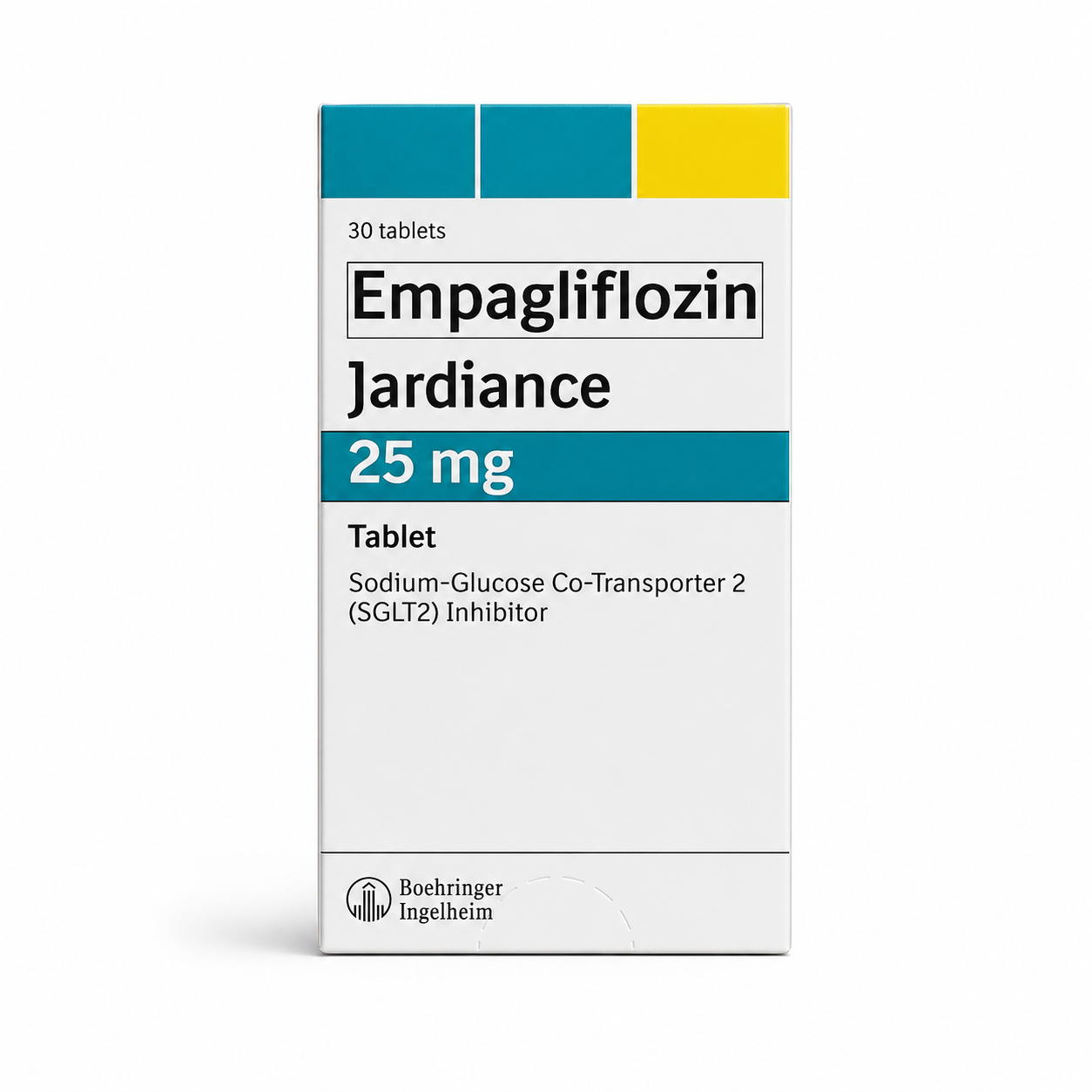

Jardiance 25mg Empagliflozin Tablets 30s
Jardiance 25mg Empagliflozin Tablets 30s is a prescription SGLT2 inhibitor for additional blood-glucose control in selected patients with type 2 diabetes who have tolerated empagliflozin 10mg. The 25mg strength should only be used when prescribed and is not the standard Jardiance dose for heart failure or chronic kidney disease.
Description
Jardiance 25mg Empagliflozin Tablets 30s is a prescription medicine containing empagliflozin 25mg in each film-coated tablet. Empagliflozin belongs to a class of medicines known as sodium-glucose co-transporter 2 inhibitors, commonly abbreviated as SGLT2 inhibitors.
The 25mg strength is used for additional glycaemic control in selected adults and children aged 10 years and above with type 2 diabetes mellitus who have tolerated the 10mg dose and require further blood-glucose reduction.
Jardiance 25mg is not generally the starting dose. Treatment normally begins with empagliflozin 10mg once daily. The dose may be increased to 25mg once daily only when clinically appropriate.
The recommended Jardiance dose for heart failure and chronic kidney disease is 10mg once daily. Patients should not change from 10mg to 25mg for a heart or kidney indication unless the treating doctor has prescribed the higher strength for an additional type 2 diabetes requirement.
Jardiance 25mg Empagliflozin Product Information
| Product Name | Jardiance 25mg Film-Coated Tablets |
|---|---|
| Active Ingredient | Empagliflozin |
| Strength | 25mg per tablet |
| Dosage Form | Film-coated tablet |
| Tablet Appearance | Oval, pale-yellow tablet marked “S25” on one side and the Boehringer Ingelheim logo on the other |
| Pack Size | 30 tablets |
| Pack Configuration | 3 blister strips of 10 tablets |
| Therapeutic Class | Sodium-glucose co-transporter 2 inhibitor |
| Medicine Class Abbreviation | SGLT2 inhibitor |
| Medicine Classification | Prescription medicine |
| Brand Owner | Boehringer Ingelheim |
| Malaysian Registration Holder | Boehringer Ingelheim (Malaysia) Sdn. Bhd. |
| Principal Malaysian Registration Number | MAL15125056ARZ |
| Principal Registered Manufacturer | Boehringer Ingelheim Seiyaku Co. Ltd., Japan |
| Supplemental Malaysian Registration | MAL24026011ACSZ |
| Supplemental Manufacturer | Rottendorf Pharma GmbH, Germany |
| Route of Administration | Oral |
Registration and manufacturer note: Confirm the MAL number and manufacturing site printed on the supplied carton, as more than one registered Malaysian manufacturing presentation may be available.
What Is Jardiance 25mg Used For?
Jardiance 25mg is used to improve glycaemic control in selected patients with type 2 diabetes mellitus when the 10mg dose has been tolerated but additional blood-glucose reduction is required.
It should be used together with an appropriate diet, physical activity and the wider diabetes-management plan recommended by the treating healthcare professional.
Jardiance may be prescribed:
- As monotherapy when metformin is considered inappropriate because of intolerance
- As an additional treatment with metformin
- With other oral glucose-lowering medicines
- With insulin when additional glycaemic control is required
- For selected children aged 10 years and above with type 2 diabetes
When Jardiance is combined with insulin or a sulfonylurea, the dose of those medicines may require review because the risk of hypoglycaemia may increase.
Is Jardiance 25mg Used for Heart Failure or Chronic Kidney Disease?
Jardiance has approved product indications for heart failure and chronic kidney disease in adults. However, the recommended empagliflozin dose for these indications is 10mg once daily.
The 25mg strength is principally used when additional glycaemic control is required in type 2 diabetes. It should not be promoted or independently selected as a stronger treatment for heart failure or chronic kidney disease.
A patient taking Jardiance for more than one condition should follow the exact strength and dose selected by the treating doctor.
Difference Between Jardiance 10mg and Jardiance 25mg
| Feature | Jardiance 10mg | Jardiance 25mg |
|---|---|---|
| Empagliflozin strength | 10mg per tablet | 25mg per tablet |
| Usual starting dose for type 2 diabetes | Yes | No |
| Additional glycaemic control | Initial treatment strength | May be used after 10mg is tolerated |
| Recommended dose for heart failure | 10mg once daily | Not the routine dose |
| Recommended dose for chronic kidney disease | 10mg once daily | Not the routine dose |
Patients should not change between Jardiance strengths without a new medical instruction.
How Jardiance Works
SGLT2 proteins in the kidneys normally return filtered glucose and sodium to the bloodstream.
Empagliflozin blocks SGLT2 activity. This allows additional glucose, sodium and water to leave the body through the urine.
In patients with type 2 diabetes, increased urinary glucose removal helps lower fasting and post-meal blood-glucose levels.
Empagliflozin also has cardiovascular and kidney effects, but increasing the dose from 10mg to 25mg is intended for additional glycaemic control rather than to provide a stronger heart-failure or kidney-disease effect.
How to Take Jardiance 25mg
- Take Jardiance exactly as prescribed by the treating doctor.
- The 25mg strength is generally taken as one tablet once daily when prescribed.
- Swallow the tablet whole with water.
- Jardiance may be taken with or without food.
- It may be taken at any time of day, but preferably at approximately the same time daily.
- Do not take more than 25mg of empagliflozin in one day.
- Do not increase, reduce or stop treatment without professional advice.
- Do not change between Jardiance 10mg and 25mg without medical direction.
- Continue the prescribed diet, physical activity and glucose-monitoring plan.
Kidney Function and the 25mg Dose
Kidney function should be assessed before empagliflozin is started and periodically during treatment.
Current professional product information recommends considering an increase to 25mg for additional glycaemic control only in patients who tolerate 10mg and have an estimated glomerular filtration rate of at least 60mL/min/1.73m².
The glucose-lowering effect of empagliflozin decreases as kidney function declines. A different or additional glucose-lowering medicine may be required when the expected glycaemic effect is insufficient.
Patients should not independently stop Jardiance merely because they have chronic kidney disease. The treating doctor must assess the indication, kidney function and complete treatment plan.
What to Do If a Dose Is Missed
Take the missed dose as soon as it is remembered.
Do not take two doses on the same day to compensate for a missed tablet. Continue with the next scheduled dose at the normal time.
Consult a doctor or pharmacist if several doses have been missed or there is uncertainty about restarting treatment.
Monitoring During Treatment
A healthcare professional may monitor:
- Blood-glucose levels
- HbA1c
- Kidney function
- Blood pressure
- Hydration and fluid status
- Symptoms of genital or urinary infection
- Signs of diabetic ketoacidosis
- Frequency of hypoglycaemia when insulin or a sulfonylurea is used
- Any unexpected deterioration in kidney-function test results
Patients should attend all blood tests and follow-up appointments arranged by their healthcare team.
Important Safety Information
- Jardiance is a prescription medicine and should not be shared with another person.
- It should not be used to treat type 1 diabetes.
- It must not be used to treat diabetic ketoacidosis.
- It is not approved as a general weight-loss medicine.
- Tell the doctor about kidney disease, liver disease, low blood pressure or recurrent infections.
- Tell the doctor about vomiting, diarrhoea, fever, reduced food intake or dehydration.
- Maintain appropriate fluid intake unless a healthcare professional has prescribed fluid restriction.
- Inform the treating team before major surgery, prolonged fasting or hospitalisation for a serious illness.
- Tell the prescriber about insulin, sulfonylureas, diuretics, lithium and all other medicines being used.
Diabetic Ketoacidosis Warning
SGLT2 inhibitors, including empagliflozin, have been associated with diabetic ketoacidosis, commonly abbreviated as DKA.
DKA is a serious and potentially life-threatening condition caused by excessive ketone accumulation. It may occur even when the blood-glucose reading is not extremely high.
Stop taking Jardiance and seek urgent medical attention if symptoms occur such as:
- Nausea or vomiting
- Abdominal pain
- Loss of appetite
- Excessive thirst
- Rapid or unusually deep breathing
- Difficulty breathing
- Confusion
- Unusual tiredness or sleepiness
- Sweet or unusual-smelling breath
The risk may increase during severe illness, dehydration, prolonged fasting, major surgery, excessive alcohol intake, sudden insulin reduction or another condition that increases insulin requirements.
Jardiance may need to be temporarily interrupted before major surgery or during serious acute illness. The healthcare team should advise when treatment can safely be restarted.
Dehydration and Low Blood Pressure
Empagliflozin increases the removal of glucose, sodium and water through the urine. This may cause dehydration or low blood pressure in susceptible patients.
The risk may be greater in:
- Older adults
- Patients taking diuretics
- Patients taking several blood-pressure medicines
- Patients who already have low blood pressure
- Patients experiencing vomiting or diarrhoea
- Patients with fever, heavy sweating or reduced fluid intake
Possible symptoms include dizziness, faintness, weakness, dry mouth, unusual thirst or reduced urine output.
Seek medical advice when significant fluid loss or symptoms of dehydration occur. Temporary treatment interruption may be required.
Genital and Urinary Infections
Empagliflozin increases glucose excretion in the urine. This may increase the likelihood of genital fungal infections and urinary tract infections.
Possible symptoms include:
- Pain or burning during urination
- Frequent or urgent urination
- Fever or chills
- Back or side pain
- Blood in the urine
- Genital itching, redness or irritation
- Unusual genital discharge or odour
Obtain prompt medical advice when symptoms of infection occur. Severe urinary infection, kidney infection or urosepsis requires urgent assessment.
Fournier’s Gangrene Warning
A rare but serious infection known as necrotising fasciitis of the perineum or Fournier’s gangrene has been reported with SGLT2 inhibitors.
Seek urgent medical attention for pain, tenderness, redness or swelling around the genitals or the area between the genitals and anus, particularly when accompanied by fever or feeling generally unwell.
Kidney Inflammation Warning
Tubulointerstitial nephritis, an inflammatory kidney condition, has been reported in association with empagliflozin.
Professional assessment is required if kidney function progressively declines or symptoms occur such as:
- Significantly reduced urine output
- Unexplained swelling or fluid retention
- Fever or rash
- Persistent nausea
- Unusual weakness
- Unexpected deterioration in kidney-function results
Hypoglycaemia
Jardiance used without insulin or a sulfonylurea generally has a relatively low risk of causing hypoglycaemia.
The risk increases when empagliflozin is combined with insulin or a medicine that stimulates insulin release.
Possible symptoms of low blood glucose include:
- Shaking or sweating
- Hunger
- Dizziness
- Headache
- Blurred vision
- Rapid heartbeat
- Anxiety, confusion or unusual behaviour
The doctor may reduce the insulin or sulfonylurea dose. Patients should follow their individual hypoglycaemia-management plan.
Possible Side Effects
Not everyone experiences side effects. Possible effects associated with empagliflozin include:
- Genital fungal infection
- Urinary tract infection
- Passing urine more frequently
- Increased urine volume
- Thirst
- Dizziness or low blood pressure
- Skin rash or itching
- Temporary changes in kidney-function test results
- Hypoglycaemia when combined with insulin or a sulfonylurea
Persistent, worsening or troublesome side effects should be discussed with a doctor or pharmacist.
Serious Symptoms Requiring Medical Attention
Seek prompt or urgent medical attention if any of the following occurs:
- Symptoms of diabetic ketoacidosis
- Severe dehydration, fainting or very low blood pressure
- Fever with painful urination or back pain
- Severe genital or perineal pain, redness or swelling
- Swelling of the face, lips, tongue or throat
- Difficulty breathing or swallowing
- A significant or unexplained decline in urine output
- A severe or widespread skin reaction
- Another serious or unexpected reaction
Medicine Interactions
Tell the doctor and pharmacist about all prescription medicines, non-prescription products, traditional medicines and supplements being used.
Medicines requiring particular consideration include:
- Insulin: combined use may increase hypoglycaemia risk.
- Sulfonylureas: medicines such as gliclazide or glimepiride may increase hypoglycaemia risk.
- Diuretics: combined use may increase fluid loss, dehydration and low blood pressure.
- Other blood-pressure medicines: additional blood-pressure reduction may occur.
- Lithium: empagliflozin may increase urinary lithium elimination and lower serum lithium concentrations.
- Other glucose-lowering medicines: the wider diabetes treatment plan may require adjustment.
Do not start, stop or change another medicine without consulting the treating doctor or pharmacist.
Pregnancy and Breastfeeding
Patients who are pregnant, planning a pregnancy or think they may be pregnant should inform their doctor before taking Jardiance.
Jardiance should not be used during pregnancy. SGLT2 inhibition may affect the developing kidneys, particularly later in pregnancy.
Jardiance should not be used while breastfeeding because a risk to the nursing infant cannot be excluded.
Use in Children and Adolescents
Empagliflozin may be used for type 2 diabetes in children aged 10 years and above under an appropriate prescription.
The recommended starting dose is 10mg once daily. The dose may be increased to 25mg only when the 10mg dose is tolerated and additional glycaemic control is required.
No data are available for children below 10 years old or children with significantly reduced kidney function.
The safety and effectiveness of empagliflozin for heart failure or chronic kidney disease have not been established in patients below 18 years old.
Urine Glucose Tests
Because Jardiance removes glucose through the urine, urine tests will normally show glucose while treatment continues.
This is an expected effect of the medicine. Blood-glucose and HbA1c results should be interpreted according to the patient’s monitoring and treatment plan.
Storage Instructions
- Store according to the conditions printed on the Malaysian carton and approved package insert.
- Keep the tablets in their original blister packaging until required.
- Protect from excessive heat and moisture.
- Keep out of reach of children.
- Do not use tablets that appear wet, damaged, discoloured or deteriorated.
- Do not use after the expiry date printed on the supplied packaging.
- Product packaging, registration number, manufacturing site, batch number and expiry date may vary between supplied batches.
Frequently Asked Questions
What is the active ingredient in Jardiance 25mg?
Each Jardiance 25mg film-coated tablet contains empagliflozin 25mg.
What type of medicine is Jardiance?
Jardiance is a sodium-glucose co-transporter 2 inhibitor, commonly abbreviated as an SGLT2 inhibitor.
What is Jardiance 25mg used for?
Jardiance 25mg is used for additional glycaemic control in selected patients with type 2 diabetes who have tolerated the 10mg dose and require further blood-glucose reduction.
Is Jardiance 25mg the starting dose?
No. The recommended starting dose is generally 10mg once daily. The dose may be increased to 25mg when the lower strength is tolerated and additional glycaemic control is required.
Is Jardiance 25mg used for heart failure?
The recommended empagliflozin dose for heart failure is 10mg once daily. The 25mg strength is not the routine heart-failure dose.
Is Jardiance 25mg used for chronic kidney disease?
The recommended empagliflozin dose for chronic kidney disease is 10mg once daily. The 25mg strength should not be independently selected for a kidney indication.
How often is Jardiance 25mg taken?
When prescribed, Jardiance 25mg is generally taken as one tablet once daily.
Can Jardiance be taken with food?
Yes. Jardiance may be taken with or without food and should be swallowed with water.
Can Jardiance 25mg be used for type 1 diabetes?
No. Jardiance should not be used to treat type 1 diabetes because of the increased risk of diabetic ketoacidosis.
Can Jardiance treat diabetic ketoacidosis?
No. Jardiance must not be used to treat diabetic ketoacidosis and may increase DKA risk in certain circumstances.
Is Jardiance a weight-loss medicine?
No. Jardiance is not approved as a general weight-loss medicine.
Can Jardiance cause low blood glucose?
Empagliflozin used alone has a relatively low hypoglycaemia risk. The risk increases when it is combined with insulin or a sulfonylurea.
Why can Jardiance cause genital infections?
Jardiance increases glucose removal through the urine. Additional glucose around the genital and urinary areas may increase the likelihood of fungal or urinary infections.
Why might Jardiance be stopped before surgery?
Major surgery, fasting and serious illness may increase the risk of diabetic ketoacidosis. The healthcare team may temporarily interrupt treatment until the patient is stable.
Will urine test positive for glucose while taking Jardiance?
Yes. Glucose in the urine is an expected effect of empagliflozin treatment.
Is Jardiance 25mg a prescription medicine in Malaysia?
Yes. Jardiance 25mg is a prescription medicine and should only be supplied and used according to a valid prescription.
What is the Malaysian registration number for Jardiance 25mg?
The principal Malaysian registration number is MAL15125056ARZ. A supplemental manufacturing presentation is registered as MAL24026011ACSZ. Verify the exact number printed on the supplied carton.
Who manufactures Jardiance 25mg?
Registered Malaysian presentations include manufacture by Boehringer Ingelheim Seiyaku Co. Ltd., Japan, and Rottendorf Pharma GmbH, Germany. Confirm the applicable manufacturer on the supplied carton.
How many tablets are supplied?
The P-Hub listing contains 30 film-coated tablets, commonly supplied as three blister strips of ten tablets.
Can pharmacies request Jardiance 25mg through P-Hub?
Jardiance 25mg Empagliflozin Tablets 30s is listed in the P-Hub B2B catalogue for approved pharmacy members. Quotation, ordering eligibility and supply are subject to P-Hub membership requirements, prescription medicine controls and current stock availability.
Prescription Medicine Notice
Jardiance 25mg is a prescription medicine. It should only be supplied, dispensed and used according to applicable Malaysian requirements and the directions of a registered doctor or pharmacist.
The information on this page is provided for pharmacy catalogue and professional product-reference purposes. It does not replace an individual medical assessment, prescription, approved Malaysian package insert or advice from a qualified healthcare professional.
Product appearance, packaging, registration number, manufacturing site, batch number, availability and expiry date may vary. Verify all information on the physical product packaging and approved insert before dispensing or use.
Product Information Sources
- European Medicines Agency – Jardiance Professional and Patient Product Information
- NPRA Malaysia – Jardiance 25mg Registration Renewal
- NPRA Malaysia – Supplemental Jardiance Manufacturing Registration
- NPRA Malaysia – Empagliflozin and Tubulointerstitial Nephritis Safety Alert
- NPRA Malaysia – SGLT2 Inhibitor and Lithium Interaction
Product information last reviewed: 12 July 2026.
Reviews (0)
Only logged in customers who have purchased this product may leave a review.
Shipping and Delivery























Reviews
There are no reviews yet.