P-Hub B2B access is available for approved pharmacy members only.


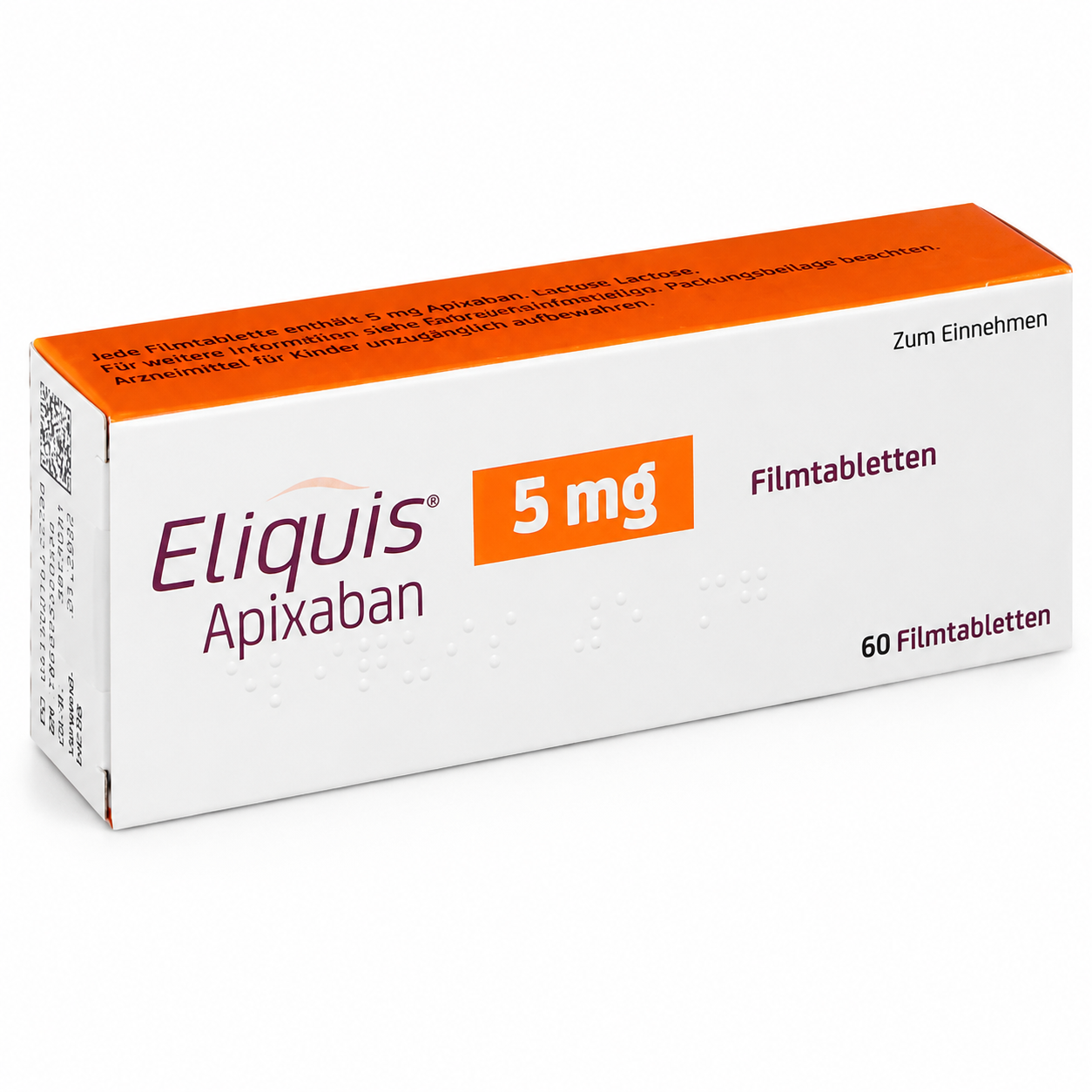

Eliquis 5mg Apixaban Tablets 60s
Eliquis 5mg Apixaban Tablets 60s is a prescription anticoagulant containing apixaban 5mg, a direct factor Xa inhibitor. It is prescribed for selected adults to prevent stroke and systemic embolism associated with non-valvular atrial fibrillation and to treat or prevent the recurrence of deep vein thrombosis and pulmonary embolism.
Description
Eliquis 5mg Apixaban Tablets 60s is a prescription anticoagulant medicine containing apixaban 5mg in each film-coated tablet. Apixaban belongs to a class of medicines known as direct factor Xa inhibitors and direct oral anticoagulants.
Eliquis reduces the ability of the blood to form harmful clots. It is prescribed for selected adults with non-valvular atrial fibrillation and for the treatment or prevention of certain venous blood-clot conditions.
Because Eliquis affects blood clotting, it may cause serious bleeding. The medicine should only be supplied and used according to a valid prescription, the approved product information and the patient’s individual anticoagulation plan.
Eliquis 5mg Apixaban Product Information
| Product Name | Eliquis 5mg Film-Coated Tablets |
|---|---|
| Active Ingredient | Apixaban |
| Strength | 5mg per tablet |
| Dosage Form | Film-coated tablet |
| Pack Size | 60 tablets |
| Pack Configuration | 6 blister strips of 10 tablets |
| Therapeutic Class | Direct factor Xa inhibitor |
| Medicine Class | Direct oral anticoagulant |
| Medicine Classification | Prescription medicine |
| Product Registration Holder | Pfizer (Malaysia) Sdn. Bhd. |
| Manufacturer | Pfizer Ireland Pharmaceuticals, Ireland |
| Malaysian Registration Number | MAL13085063ARZ |
| Route of Administration | Oral |
What Is Eliquis 5mg Used For?
Eliquis is prescribed for specific conditions in which harmful blood clots have formed or there is a clinically significant risk of blood-clot formation.
Prevention of Stroke in Non-Valvular Atrial Fibrillation
Eliquis may be used to prevent stroke and systemic embolism in adults with non-valvular atrial fibrillation who have one or more risk factors.
Atrial fibrillation is an irregular heart rhythm that may allow blood clots to form inside the heart. A clot can travel to the brain and cause a stroke or move to another part of the body and cause a systemic embolism.
Treatment of Deep Vein Thrombosis
Eliquis is used to treat deep vein thrombosis, commonly abbreviated as DVT. A DVT is a blood clot that forms in a deep vein, frequently in the leg.
Symptoms may include swelling, pain, warmth or skin discolouration, although some patients may have few noticeable symptoms.
Treatment of Pulmonary Embolism
Eliquis is also used to treat pulmonary embolism, commonly abbreviated as PE. A pulmonary embolism occurs when a blood clot travels to and blocks a blood vessel in the lungs.
Sudden breathing difficulty, chest pain, coughing blood, fainting or a rapid heartbeat may indicate a medical emergency and require immediate attention.
Prevention of Recurrent DVT and PE
Apixaban may be continued after initial treatment to reduce the risk of another DVT or PE. The appropriate strength, dosage and treatment duration depend on how long the patient has already received anticoagulant treatment and the balance between clotting and bleeding risks.
Prevention of Blood Clots After Joint-Replacement Surgery
Eliquis also has an indication for preventing venous thromboembolic events following elective hip or knee replacement surgery. However, the approved reference dose for this indication is generally apixaban 2.5mg twice daily.
Eliquis 5mg should not be presented as the routine post-operative prophylaxis strength. The correct strength and treatment schedule must be determined by the treating doctor.
How Eliquis Works
Factor Xa is an important component of the blood-clotting process. Apixaban selectively inhibits factor Xa, reducing the generation of thrombin and the formation of blood clots.
Eliquis does not dissolve an existing blood clot immediately. It helps prevent an existing clot from becoming larger and reduces the likelihood of additional clots forming while the body gradually breaks down the original clot.
Reference Dosing Information
The dosage of Eliquis varies substantially according to the indication. Patients must follow the dosage shown on their prescription and dispensing label. The following information is provided for professional product reference and must not be used for self-dosing.
Non-Valvular Atrial Fibrillation
The usual reference dose for preventing stroke and systemic embolism in adults with non-valvular atrial fibrillation is apixaban 5mg twice daily.
A reduced dose of 2.5mg twice daily may be required when the patient has at least two of the following characteristics:
- Age 80 years or older
- Body weight of 60kg or less
- Serum creatinine of at least 1.5mg/dL
Treatment of DVT or PE
The approved reference regimen for acute DVT or PE begins with apixaban 10mg twice daily for the first seven days, followed by apixaban 5mg twice daily.
The initial 10mg dose may involve taking two 5mg tablets per dose, but this must only be done when expressly prescribed.
Prevention of Recurrent DVT or PE
After completion of six months of anticoagulant treatment for DVT or PE, the reference dose for preventing recurrence is generally apixaban 2.5mg twice daily.
The treating doctor must determine the appropriate total treatment duration after assessing the continuing benefit of anticoagulation against the patient’s bleeding risk.
How to Take Eliquis 5mg
- Take Eliquis exactly as prescribed by the treating doctor.
- Take each dose at approximately the same times every day.
- Swallow the tablet with water.
- Eliquis may be taken with or without food.
- Do not increase, reduce or stop treatment without professional advice.
- Do not share Eliquis with another person.
- Do not switch between the 5mg and 2.5mg strengths without a new medical instruction.
- Inform every doctor, dentist and pharmacist that Eliquis is being taken.
For patients who cannot swallow whole tablets, the approved product information allows apixaban tablets to be crushed and administered using specified liquids or soft food. This should only be done according to instructions from a healthcare professional.
What to Do If a Dose Is Missed
If an Eliquis dose is missed, the approved product information advises taking it as soon as it is remembered and then continuing with the usual twice-daily schedule.
Do not take an unauthorised extra dose. Seek advice from a doctor or pharmacist when more than one dose has been missed or when there is uncertainty about the next dose.
Do Not Stop Eliquis Without Medical Advice
Prematurely discontinuing apixaban without suitable alternative anticoagulation may increase the risk of blood clots, stroke or systemic embolism.
Do not stop Eliquis merely because bruising occurs, the patient feels well or an upcoming procedure is planned. A healthcare professional must assess the bleeding risk, clotting risk and need for temporary interruption or alternative anticoagulation.
Major Bleeding Warning
Eliquis reduces blood clotting and may cause bleeding from any tissue or organ. Bleeding can occasionally be severe, life-threatening or fatal.
Obtain urgent medical attention for possible signs of serious bleeding, including:
- Bleeding that is heavy, persistent or cannot be stopped
- Vomiting blood or material resembling coffee grounds
- Black, tar-like or visibly bloody stools
- Red, pink or brown urine
- Coughing up blood
- Severe or unexplained abdominal pain
- An unusually severe or persistent headache
- Sudden weakness, numbness, confusion or speech difficulty
- Unexplained severe dizziness or fainting
- Large, painful or rapidly expanding bruises
- Bleeding following a fall, accident or head injury
A person taking Eliquis should be assessed promptly following a significant head injury, even when there is no obvious external bleeding.
Commonly Reported Effects
Not everyone experiences adverse effects. Reactions associated with apixaban may include:
- Bruising or contusion
- Nosebleeds
- Bleeding gums
- Prolonged bleeding from minor cuts
- Blood in the urine
- Gastrointestinal bleeding
- Anaemia related to blood loss
- Nausea
- Skin rash or itching
Report persistent, recurrent or concerning bleeding to a doctor or pharmacist. Do not independently stop treatment unless emergency medical instructions are given.
Who Should Not Take Eliquis?
Eliquis may be contraindicated in patients with:
- An allergy to apixaban or another ingredient in the tablet
- Active clinically significant bleeding
- Liver disease associated with impaired clotting and clinically relevant bleeding risk
- A lesion or medical condition that creates a significant risk of major bleeding
- Recent intracranial haemorrhage
- Certain recent brain, spinal or eye surgeries
- Concurrent treatment with another anticoagulant, except during medically supervised switching or specific procedural circumstances
A doctor must assess the patient’s complete medical history before treatment begins.
Conditions Requiring Additional Caution
Additional assessment or monitoring may be required for patients who:
- Have kidney impairment
- Have liver impairment
- Have a current or previous stomach or intestinal ulcer
- Have a bleeding disorder or low platelet count
- Have uncontrolled high blood pressure
- Have recently undergone surgery or experienced major trauma
- Have a prosthetic heart valve
- Have triple-positive antiphospholipid syndrome
- Have cancer associated with increased bleeding risk
- Are elderly, frail or at increased risk of falls
Apixaban is not recommended as an alternative to initial unfractionated heparin treatment for a pulmonary embolism accompanied by haemodynamic instability or when thrombolysis or pulmonary embolectomy may be required.
Surgery, Dental Treatment and Invasive Procedures
Patients should tell the doctor, dentist or surgeon that they take Eliquis before any operation, dental extraction, injection, biopsy or invasive procedure.
The timing of temporary interruption depends on the bleeding risk of the procedure, kidney function, urgency and the patient’s underlying clotting risk.
Do not independently stop Eliquis before a procedure. The treating healthcare professional must provide specific instructions on when to stop and restart treatment.
Spinal and Epidural Procedures
Patients receiving anticoagulants may be at risk of spinal or epidural haematoma during spinal anaesthesia, epidural anaesthesia or spinal puncture. This may cause long-term or permanent paralysis.
Seek urgent medical attention after a spinal or epidural procedure if symptoms develop such as:
- Numbness or weakness in the legs
- Severe or unusual back pain
- Loss of bladder control
- Loss of bowel control
Medicine Interactions
Tell the doctor and pharmacist about all prescription medicines, non-prescription products, traditional medicines and supplements being used.
Products that may increase bleeding risk or alter apixaban exposure include:
- Other anticoagulants: including warfarin, rivaroxaban, dabigatran, heparin and low-molecular-weight heparins
- Antiplatelet medicines: including aspirin, clopidogrel and related medicines
- Non-steroidal anti-inflammatory medicines: including ibuprofen, diclofenac and naproxen
- SSRIs and SNRIs: certain antidepressants may further increase bleeding risk
- Strong CYP3A4 and P-gp inhibitors: including ketoconazole, itraconazole, voriconazole, posaconazole and ritonavir
- Strong CYP3A4 and P-gp inducers: including rifampicin, carbamazepine, phenytoin, phenobarbital and St John’s wort
Do not begin regular pain-reliever, anti-inflammatory, herbal or supplement use without first checking with a healthcare professional.
Pregnancy and Breastfeeding
Patients who are pregnant, planning a pregnancy or think they may be pregnant should inform their doctor before taking Eliquis. The approved reference information advises avoiding apixaban during pregnancy as a precaution.
It is not known whether apixaban passes into human breast milk. A doctor must decide whether breastfeeding or apixaban treatment should be discontinued after considering the benefit of treatment and the benefit of breastfeeding.
Storage Instructions
- Store according to the conditions printed on the carton and approved package insert.
- Keep the tablets in their original blister packaging until required.
- Protect the product from excessive heat and moisture.
- Keep out of reach of children.
- Do not use tablets that appear damaged, wet or deteriorated.
- Do not use after the expiry date printed on the supplied packaging.
- Product packaging, batch number and expiry date may vary between supplied batches.
Frequently Asked Questions
What is the active ingredient in Eliquis 5mg?
Each Eliquis 5mg film-coated tablet contains apixaban 5mg.
What type of medicine is Eliquis?
Eliquis is a direct factor Xa inhibitor and direct oral anticoagulant used to reduce the formation of harmful blood clots.
Is Eliquis a blood thinner?
Eliquis is commonly described as a blood thinner, although it does not literally thin the blood. It reduces the blood’s ability to form clots by inhibiting factor Xa.
What is Eliquis 5mg used for?
Eliquis 5mg may be prescribed to prevent stroke and systemic embolism in selected adults with non-valvular atrial fibrillation and as part of the treatment regimen for DVT or PE.
Can Eliquis dissolve a blood clot?
Eliquis does not directly dissolve a clot. It prevents an existing clot from growing and helps prevent additional clots while the body gradually breaks down the original clot.
How often is Eliquis 5mg taken?
Eliquis is commonly taken twice daily, but the exact strength and regimen depend on the indication, treatment stage, age, weight, kidney function and other clinical factors. Follow the prescription label exactly.
What is the difference between Eliquis 5mg and 2.5mg?
Both strengths contain apixaban. The 2.5mg strength is used for selected reduced-dose patients, post-operative clot prevention and prevention of recurrent DVT or PE after completion of the initial treatment period. Patients must not switch strengths without medical instructions.
Can Eliquis be stopped when the patient feels better?
No. Premature discontinuation may increase the risk of stroke or another blood clot. Treatment should only be stopped or interrupted under medical direction.
Can Eliquis be taken with food?
Yes. Eliquis may be taken with or without food and should normally be swallowed with water.
What should be done after a missed dose?
The missed dose should generally be taken as soon as it is remembered, followed by continuation of the normal twice-daily schedule. Consult a healthcare professional when multiple doses have been missed.
Does Eliquis require routine INR testing?
Routine INR monitoring used for warfarin is generally not required for apixaban. However, patients still require clinical review and may need kidney-function, liver-function, blood-count or other assessments.
Can painkillers be taken with Eliquis?
Some painkillers, particularly non-steroidal anti-inflammatory medicines such as ibuprofen, diclofenac and naproxen, may increase bleeding risk. Check with a doctor or pharmacist before taking a pain-reliever.
Can Eliquis be stopped before dental treatment?
Do not stop Eliquis independently. The dentist and prescribing doctor should assess the procedure’s bleeding risk and provide specific instructions.
What is the Malaysian registration number for Eliquis 5mg?
The Malaysian product registration number is MAL13085063ARZ.
Who manufactures Eliquis 5mg?
The Malaysian registration record lists Pfizer Ireland Pharmaceuticals, Ireland, as the manufacturer and Pfizer (Malaysia) Sdn. Bhd. as the product registration holder.
How many tablets are supplied in one pack?
The P-Hub listing contains 60 tablets, supplied as six blister strips of ten tablets.
Can pharmacies request Eliquis through P-Hub?
Eliquis 5mg Apixaban Tablets 60s is listed in the P-Hub B2B catalogue for approved pharmacy members. Quotation, ordering eligibility and supply are subject to P-Hub membership requirements, prescription medicine controls and current stock availability.
Prescription Medicine Notice
Eliquis 5mg is a prescription anticoagulant medicine. It should only be supplied, dispensed and used according to applicable Malaysian requirements and the directions of a registered doctor or pharmacist.
The information on this page is provided for pharmacy catalogue and professional product-reference purposes. It does not replace an individual medical assessment, anticoagulation plan, prescription, approved Malaysian package insert or advice from a qualified healthcare professional.
Product appearance, packaging, batch number, availability and expiry date may vary. Verify all information on the physical product packaging and approved insert before dispensing or use.
Product Information Sources
- Pfizer – Eliquis Professional Product Information
- National Pharmaceutical Regulatory Agency Malaysia – Eliquis Registration Renewal Record
- National Pharmaceutical Regulatory Agency Malaysia – Eliquis DVT and PE Indication
- National Pharmaceutical Regulatory Agency Malaysia – Apixaban Bleeding Interaction Safety Information
Product information last reviewed: 11 July 2026.
Reviews (0)
Only logged in customers who have purchased this product may leave a review.
Shipping and Delivery























Reviews
There are no reviews yet.