P-Hub B2B access is available for approved pharmacy members only.


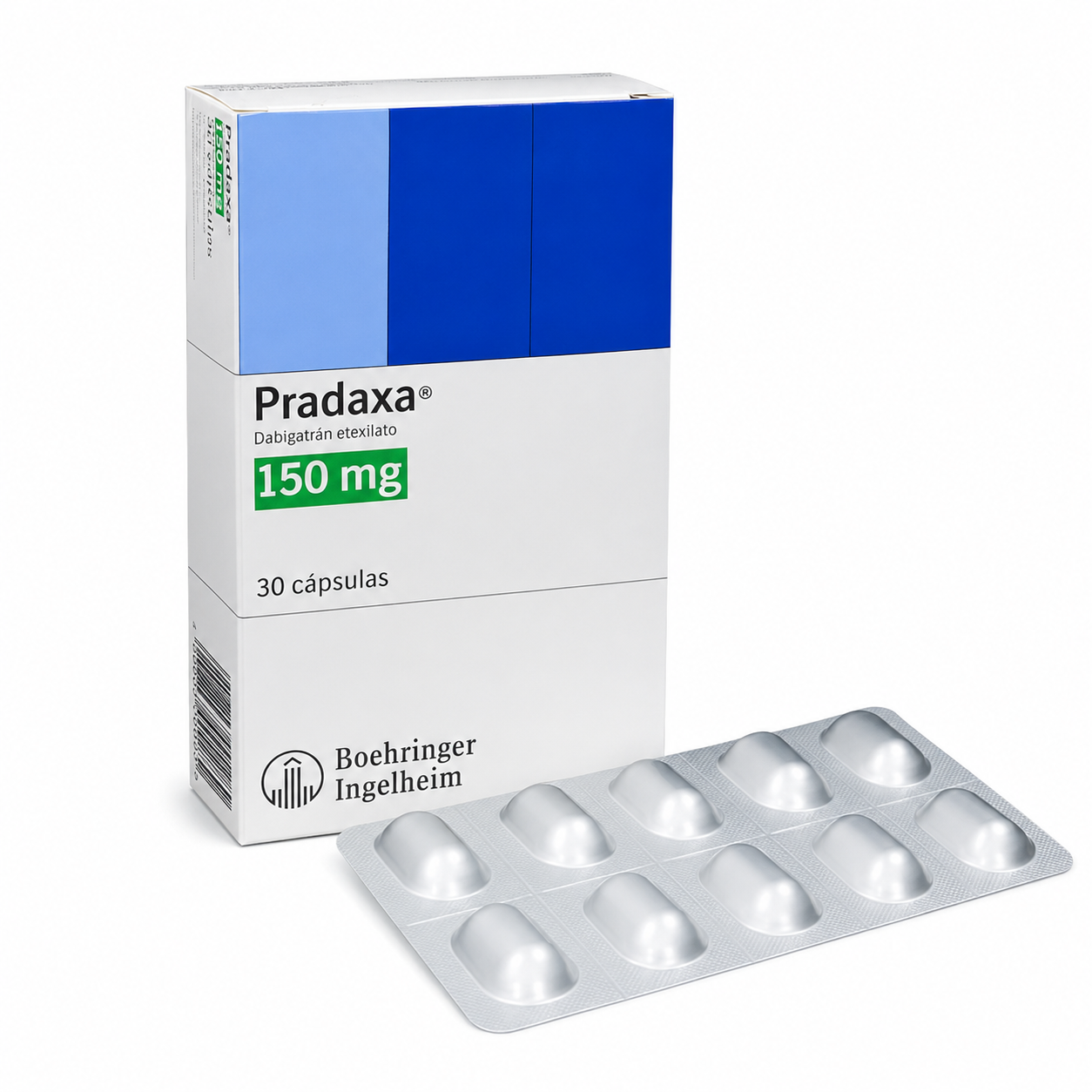

Pradaxa 150mg Dabigatran Etexilate Capsules 30s
Pradaxa 150mg Dabigatran Etexilate Capsules 30s is a prescription direct oral anticoagulant used for selected adults with non-valvular atrial fibrillation and for the treatment or prevention of recurrent deep vein thrombosis and pulmonary embolism. Each hard capsule contains dabigatran etexilate 150mg. Swallow the capsule whole and do not stop treatment without medical advice.
Description
Pradaxa 150mg Dabigatran Etexilate Capsules 30s is a prescription direct oral anticoagulant containing dabigatran etexilate 150mg in each hard capsule.
Dabigatran reduces the formation of harmful blood clots by directly inhibiting thrombin, an enzyme involved in the final stages of blood coagulation.
Pradaxa 150mg may be prescribed to reduce the risk of stroke and systemic embolism in selected adults with non-valvular atrial fibrillation. It may also be used to treat deep vein thrombosis and pulmonary embolism and to reduce the risk of these conditions recurring.
Do not stop taking Pradaxa without medical advice. Interrupting anticoagulant treatment may increase the risk of stroke, deep vein thrombosis, pulmonary embolism or another serious thromboembolic event.
Pradaxa 150mg Product Information
| Product Name | Pradaxa 150mg Hard Capsules |
|---|---|
| Active Ingredient | Dabigatran etexilate |
| Strength | 150mg dabigatran etexilate, supplied as the mesilate salt, per capsule |
| Dosage Form | Hard capsule containing yellowish pellets |
| Capsule Appearance | Light-blue opaque cap and white opaque body, marked with the Boehringer Ingelheim symbol and “R150” |
| Pack Size | 30 capsules |
| Pack Configuration | 3 blister strips of 10 capsules |
| Therapeutic Class | Direct oral anticoagulant |
| Medicine Class | Direct thrombin inhibitor |
| Common Abbreviation | DOAC |
| ATC Classification | B01AE07 |
| Medicine Classification | Prescription medicine |
| Malaysian Registration Number | MAL20112114AZ |
| Malaysian Registration Holder | Boehringer Ingelheim (Malaysia) Sdn. Bhd. |
| Manufacturer | Boehringer Ingelheim Pharma GmbH & Co. KG, Germany |
| Route of Administration | Oral |
What Is Pradaxa 150mg Used For?
Pradaxa 150mg has product-specific anticoagulant indications. The medicine should only be used for the indication and treatment period stated in the patient’s prescription.
Stroke Prevention in Non-Valvular Atrial Fibrillation
Pradaxa 150mg may be prescribed to reduce the risk of stroke and systemic embolism in adults with non-valvular atrial fibrillation who have one or more additional risk factors.
These risk factors may include:
- A previous stroke
- A previous transient ischaemic attack
- Age of 75 years or above
- Heart failure
- Diabetes mellitus
- Hypertension
Atrial fibrillation is an irregular heart rhythm that may allow blood to pool and form a clot inside the heart. A clot can travel to the brain and cause an ischaemic stroke or travel to another part of the body and cause systemic embolism.
Pradaxa reduces this risk by decreasing the blood’s ability to form harmful clots. It does not correct the abnormal heart rhythm itself.
Treatment of Deep Vein Thrombosis
Deep vein thrombosis, commonly abbreviated as DVT, is a blood clot that forms in a deep vein, usually in the leg.
Possible symptoms include:
- Swelling affecting one leg
- Pain or tenderness in the calf or thigh
- Warmth over the affected area
- Red or discoloured skin
Pradaxa 150mg may be used to treat an established DVT after the patient has first received a suitable injectable or intravenous anticoagulant for at least five days.
Treatment of Pulmonary Embolism
Pulmonary embolism, commonly abbreviated as PE, occurs when a blood clot travels to an artery in the lungs.
Possible symptoms include:
- Sudden shortness of breath
- Chest pain that may worsen during breathing
- Rapid breathing
- Rapid heartbeat
- Coughing up blood
- Fainting or severe light-headedness
A suspected pulmonary embolism is a medical emergency. Pradaxa should only be started as part of an appropriate medically supervised treatment programme.
Prevention of Recurrent DVT and PE
Pradaxa may be continued after initial blood-clot treatment to reduce the risk of another DVT or PE.
The treatment duration depends on whether the original clot was related to a temporary factor, such as surgery or immobilisation, or a continuing risk factor. The benefit of preventing another clot must be balanced against the patient’s bleeding risk.
Is Pradaxa 150mg Used After Hip or Knee Replacement?
The 150mg capsule should not be described as the routine Pradaxa presentation for primary prevention of venous thromboembolism after elective hip or knee replacement surgery.
Post-operative prophylaxis regimens generally use the 75mg or 110mg capsule strengths according to the patient’s age, kidney function and other risk factors.
Do not substitute the 150mg capsule for another Pradaxa strength unless specifically instructed by the treating doctor.
How Pradaxa Works
Dabigatran etexilate is a prodrug. After absorption, it is converted into dabigatran, the active anticoagulant.
Dabigatran directly and reversibly inhibits thrombin. Thrombin is involved in several important stages of blood-clot formation, including:
- Converting fibrinogen into fibrin
- Activating platelets
- Strengthening and expanding a developing blood clot
By inhibiting thrombin, dabigatran reduces the formation and growth of harmful blood clots.
Is Pradaxa a Blood Thinner?
Pradaxa is commonly described as a blood thinner, but it does not physically dilute the blood.
It is an anticoagulant. It interferes with the blood-clotting process by directly blocking thrombin.
Reference Dosage for Pradaxa 150mg
Dosage must be prescribed after assessment of the patient’s diagnosis, age, kidney function, bleeding risk, body weight and concurrent medicines.
Non-Valvular Atrial Fibrillation
The usual adult reference dose is:
- One 150mg capsule twice daily
- A total daily dose of 300mg
- One dose in the morning and one dose in the evening
- Doses taken at approximately the same time every day
- An interval as close to 12 hours as reasonably possible
Treatment and Prevention of Recurrent DVT or PE
The usual adult reference dose is one 150mg capsule twice daily after treatment with a parenteral anticoagulant for at least five days.
Pradaxa should not normally be used as the only initial anticoagulant during the first days of treatment for an acute DVT or PE unless the approved local treatment instructions specifically state otherwise.
Patients Who May Require the 110mg Strength
The 150mg capsule is not appropriate for every patient.
A lower dose of one 110mg capsule twice daily is generally recommended for:
- Patients aged 80 years or above
- Patients receiving verapamil with dabigatran
A lower dose may also be considered after individual assessment in:
- Patients aged between 75 and 80 years
- Patients with moderate renal impairment
- Patients with gastritis or oesophagitis
- Patients with gastro-oesophageal reflux disease
- Patients with another increased risk of bleeding
Patients must not independently open a 150mg capsule, divide its pellets or attempt to create a lower dose. A properly manufactured lower-strength capsule must be prescribed when dose reduction is required.
How to Take Pradaxa 150mg
- Take Pradaxa exactly as prescribed.
- Take one dose in the morning and one in the evening when twice-daily treatment is prescribed.
- Keep the dosing interval as close to 12 hours as possible.
- Swallow each capsule whole with a full glass of water.
- Pradaxa may be taken with or without food.
- Take it with food if the medicine causes stomach discomfort.
- Do not chew, crush or open the capsule.
- Do not sprinkle the pellets onto food.
- Do not mix the capsule contents with a drink.
- Do not transfer capsules into an ordinary pill box unless a healthcare professional confirms suitable moisture protection.
- Do not change the dose or stop treatment without medical advice.
Do Not Open, Crush or Chew Pradaxa Capsules
Pradaxa contains dabigatran etexilate pellets formulated to provide the intended medicine exposure when the capsule is swallowed intact.
Opening the capsule can substantially increase absorption and may increase the risk of serious bleeding.
The capsule must therefore not be:
- Opened
- Chewed
- Crushed
- Cut
- Emptied onto food
- Administered through a feeding tube without product-specific specialist instructions
A patient who cannot swallow the capsule whole should contact the prescribing doctor. The dose or anticoagulant treatment may need to be changed.
What to Do If a Dose Is Missed
A missed dose may still be taken when more than six hours remain before the next scheduled dose.
If the next dose is due within six hours:
- Skip the missed dose.
- Take the next dose at the usual time.
- Do not take two capsules together.
- Do not take an additional dose later to compensate.
Contact the treating doctor or pharmacist if several doses have been missed or treatment has been interrupted.
Do Not Stop Pradaxa Without Medical Advice
The anticoagulant effect decreases after Pradaxa is stopped. Premature discontinuation may expose the patient to the clotting risk associated with the underlying condition.
Stopping treatment may increase the risk of:
- Ischaemic stroke
- Systemic embolism
- Recurrent DVT
- Recurrent pulmonary embolism
Bleeding, stomach discomfort, a planned procedure or concern about side effects should be discussed with the treating healthcare professional rather than managed by stopping the medicine independently.
Kidney Function Is Essential
Dabigatran is substantially eliminated through the kidneys. Reduced kidney function may cause the medicine to accumulate and increase bleeding risk.
Kidney function should be assessed:
- Before Pradaxa is started
- At least annually in older patients and patients with mild or moderate renal impairment
- More frequently when kidney function may be declining
- During dehydration, severe vomiting or diarrhoea
- During serious infection or acute illness
- When a medicine that may affect kidney function is started
Creatinine clearance should be calculated using the method specified in the approved product information.
Pradaxa is contraindicated in adults with severe renal impairment defined as creatinine clearance below 30mL/min.
Patients who develop acute kidney failure during treatment require urgent professional assessment and discontinuation according to medical instructions.
Bleeding Risk
Bleeding is the principal risk associated with Pradaxa. Bleeding can occur from any organ or tissue and may occasionally be severe, life-threatening or fatal.
Possible signs of bleeding include:
- Unusual or excessive bruising
- Prolonged bleeding from a cut
- Repeated nosebleeds
- Bleeding gums
- Red, pink or brown urine
- Red or black stools
- Vomiting blood or material resembling coffee grounds
- Coughing up blood
- Unusually heavy or prolonged menstrual bleeding
- Unexplained weakness, dizziness or paleness
- An unexplained fall in blood pressure
Minor bruising may occur during anticoagulant treatment. Persistent, spontaneous, severe or unexplained bleeding requires medical assessment.
Symptoms Requiring Urgent Medical Attention
Seek urgent medical help for:
- Bleeding that does not stop with firm pressure
- Vomiting blood
- Black, tar-like stools
- A large amount of blood in the urine
- Coughing up blood
- Severe or persistent abdominal pain
- A sudden severe headache
- Sudden weakness, numbness or speech difficulty
- Confusion, seizure or loss of consciousness
- Severe dizziness or fainting
- Significant trauma or a head injury
- Unexpected breathlessness, chest pain or rapid heartbeat
Medical staff should be told immediately that the patient is taking dabigatran.
Falls, Injuries and Head Trauma
Patients taking Pradaxa should seek prompt assessment after a significant fall or injury, particularly when the head has been struck.
Internal bleeding may occur without a visible wound. Warning symptoms may include headache, vomiting, drowsiness, confusion, weakness or loss of balance.
Surgery, Dental Treatment and Medical Procedures
Tell every doctor, dentist, surgeon, anaesthetist and pharmacist that Pradaxa is being taken.
Pradaxa may need to be interrupted before:
- Major surgery
- Dental extraction
- Endoscopy with a planned biopsy
- Spinal or epidural anaesthesia
- Lumbar puncture
- Another invasive procedure with clinically important bleeding risk
The required interruption period depends on kidney function, bleeding risk and the procedure. Patients must not choose their own stopping date.
Stopping too early may increase clotting risk, while stopping too late may increase procedural bleeding risk.
Spinal and Epidural Procedures
Spinal anaesthesia, epidural anaesthesia and lumbar puncture require careful anticoagulant timing because bleeding around the spinal cord can cause serious neurological complications.
Seek urgent assessment for back pain, numbness, weakness of the legs or loss of bladder or bowel control following a spinal procedure.
Who Should Not Take Pradaxa?
Pradaxa should not be used in patients with:
- An allergy to dabigatran etexilate or another ingredient
- Active clinically significant bleeding
- Severe renal impairment with creatinine clearance below 30mL/min
- A current or recent condition associated with a major bleeding risk
- A recent gastrointestinal ulcer with significant bleeding risk
- Recent brain, spinal or eye surgery
- Recent bleeding within the brain
- Known or suspected oesophageal varices
- A vascular aneurysm or major vascular abnormality with bleeding risk
- Severe liver disease expected to affect survival
- A prosthetic heart valve requiring anticoagulation
Concurrent use with another anticoagulant is generally contraindicated except during a medically supervised transition or another specifically permitted clinical circumstance.
Pradaxa and Prosthetic Heart Valves
Pradaxa should not be used in patients with prosthetic heart valves requiring anticoagulant treatment.
Patients with a mechanical heart valve require a different anticoagulation strategy selected by a cardiologist or other appropriate specialist.
Antiphospholipid Syndrome
Direct oral anticoagulants, including dabigatran, are generally not recommended for patients with thrombosis associated with antiphospholipid syndrome, particularly patients who test positive for all three major antiphospholipid antibodies.
A vitamin K antagonist or another specialist-selected treatment may be more appropriate.
Medicine Interactions
Tell the doctor and pharmacist about all prescription medicines, non-prescription products, traditional medicines and supplements being used.
Other Anticoagulants
Pradaxa should not normally be combined with:
- Warfarin
- Apixaban
- Rivaroxaban
- Edoxaban
- Heparin
- Enoxaparin
- Dalteparin
- Fondaparinux
Temporary overlap or carefully timed switching may be required in specific clinical circumstances. This must be managed by a healthcare professional.
Antiplatelet Medicines
Medicines such as aspirin, clopidogrel, prasugrel and ticagrelor may increase bleeding risk when combined with Pradaxa.
Some patients require combined anticoagulant and antiplatelet treatment after a coronary intervention or for another specialist indication. Such combinations require individual assessment and monitoring.
NSAID Pain Medicines
Non-steroidal anti-inflammatory medicines may increase gastrointestinal and other bleeding risk.
Examples include:
- Ibuprofen
- Diclofenac
- Naproxen
- Ketoprofen
- Etoricoxib and other COX-2 inhibitors
Ask a doctor or pharmacist before selecting a pain medicine. Paracetamol may be suitable for some patients but must still be used according to its own safety requirements.
Antidepressants
Selective serotonin reuptake inhibitors and serotonin-noradrenaline reuptake inhibitors may increase bleeding risk.
Examples include sertraline, escitalopram, fluoxetine, venlafaxine and duloxetine.
P-Glycoprotein Inhibitors
Dabigatran etexilate is transported by P-glycoprotein. Medicines that inhibit this transporter may increase dabigatran exposure and bleeding risk.
Important examples include:
- Verapamil
- Amiodarone
- Quinidine
- Clarithromycin
- Ticagrelor
Some strong inhibitors are contraindicated, including systemic ketoconazole, itraconazole, cyclosporine, dronedarone and glecaprevir/pibrentasvir.
P-Glycoprotein Inducers
Medicines that induce P-glycoprotein may lower dabigatran exposure and reduce anticoagulant effectiveness.
Examples include:
- Rifampicin
- Carbamazepine
- Phenytoin
- St John’s wort
Concurrent use should generally be avoided unless the treating specialist provides specific instructions.
Digestive Symptoms
Dabigatran capsules contain tartaric-acid-based pellets that support consistent absorption but may contribute to gastrointestinal discomfort in some patients.
Possible symptoms include:
- Indigestion or dyspepsia
- Upper abdominal discomfort
- Nausea
- Diarrhoea
- Gastro-oesophageal reflux symptoms
- Difficulty swallowing
Taking the intact capsule with food and a full glass of water may help some patients. Persistent pain, painful swallowing, vomiting or signs of gastrointestinal bleeding require medical assessment.
Possible Side Effects
Not everyone experiences side effects. Possible effects include:
- Bruising
- Nosebleeds
- Bleeding gums
- Gastrointestinal bleeding
- Blood in the urine
- Anaemia
- Indigestion
- Abdominal pain
- Nausea
- Diarrhoea
- Skin rash or itching
Persistent, worsening or unexpected effects should be discussed with a doctor or pharmacist.
Serious Reactions
Seek urgent medical attention for:
- Severe or uncontrolled bleeding
- Symptoms of bleeding within the brain
- Severe gastrointestinal bleeding
- Swelling of the face, lips, tongue or throat
- Difficulty breathing or swallowing
- A serious or widespread skin reaction
- Sudden reduction in urine output
- A significant fall, injury or head trauma
Reversal of Pradaxa’s Anticoagulant Effect
Idarucizumab is a specific reversal agent for dabigatran that may be used in adults when rapid reversal is required because of life-threatening or uncontrolled bleeding or an urgent medical procedure.
This treatment is administered in a hospital or another appropriately equipped medical setting.
Reversing the anticoagulant effect can expose the patient to the clotting risk associated with the underlying disease. The medical team determines whether and when anticoagulant treatment should be restarted.
Blood Testing and Monitoring
Pradaxa does not normally require routine INR-guided dose adjustment in the same way as warfarin.
However, patients still require appropriate clinical monitoring, including:
- Kidney-function assessment
- Review of bleeding symptoms
- Haemoglobin testing when anaemia or blood loss is suspected
- Medication-interaction review
- Assessment before surgery or another invasive procedure
- Specialised coagulation testing when clinically required
INR is not a reliable measure of Pradaxa’s anticoagulant activity.
Pregnancy and Breastfeeding
Patients who are pregnant, planning pregnancy or think they may be pregnant should inform the prescribing doctor.
Pradaxa should not be used during pregnancy unless the treating specialist determines that it is clearly necessary.
Breastfeeding should be discontinued during Pradaxa treatment because adequate clinical information regarding dabigatran exposure in nursing infants is unavailable.
Use in Children and Adolescents
The P-Hub Malaysian 150mg presentation should be supplied according to its Malaysian prescription and package insert.
Do not apply foreign paediatric dosing tables to a child or adolescent. Paediatric dabigatran dosing, when approved and clinically appropriate, depends on age, body weight, kidney function and the ability to swallow the relevant formulation whole.
Storage Instructions
- Keep the capsules in their original aluminium blister packaging.
- Protect the capsules from moisture.
- Peel back the blister foil only when a capsule is required.
- Do not push the capsule through the blister foil if the pack uses peel-open unit-dose blisters.
- Do not place loose capsules in an ordinary medicine container.
- Do not expose capsules to bathroom humidity, water or excessive heat.
- Keep out of sight and reach of children.
- Do not use a capsule that is wet, cracked, soft, damaged or deteriorated.
- Do not use after the expiry date printed on the carton or blister.
- Expiry varies by supplied batch.
Frequently Asked Questions
What is the active ingredient in Pradaxa 150mg?
Each hard capsule contains dabigatran etexilate 150mg, supplied as dabigatran etexilate mesilate.
What type of medicine is Pradaxa?
Pradaxa is a direct oral anticoagulant and direct thrombin inhibitor.
What is Pradaxa 150mg used for?
It is used to reduce stroke and systemic-embolism risk in selected adults with non-valvular atrial fibrillation and to treat or prevent recurrent DVT and pulmonary embolism.
How often is Pradaxa 150mg taken?
For the principal adult indications, the usual reference dosage is one 150mg capsule twice daily. The individual prescription must be followed.
How far apart should Pradaxa doses be?
The morning and evening doses should be taken at approximately the same times each day, with an interval as close to 12 hours as possible.
Can Pradaxa be taken with food?
Yes. Pradaxa can be taken with or without food. Taking it with food may help reduce digestive discomfort.
Can the Pradaxa capsule be opened?
No. Opening the capsule can increase medicine exposure and bleeding risk.
Can Pradaxa capsules be crushed or chewed?
No. The capsules must be swallowed whole with water.
What should be done after missing a dose?
Take the missed dose only when more than six hours remain before the next scheduled dose. Skip it when the next dose is due within six hours. Never take a double dose.
Can Pradaxa be stopped suddenly?
Do not stop Pradaxa without medical advice. Premature interruption may increase the risk of stroke, DVT or pulmonary embolism.
Is Pradaxa the same as warfarin?
No. Both are anticoagulants, but they work differently. Pradaxa directly inhibits thrombin and does not normally use routine INR-guided dosing.
Can Pradaxa be used with aspirin?
Combined treatment may substantially increase bleeding risk. Aspirin should only be used with Pradaxa when the treating healthcare professional has specifically prescribed the combination.
Can ibuprofen be taken with Pradaxa?
Ibuprofen and other NSAIDs may increase bleeding risk. Obtain professional advice before using them.
Why must kidney function be checked?
Dabigatran is substantially eliminated through the kidneys. Reduced kidney function can cause the medicine to accumulate and increase bleeding risk.
Can a patient with severe kidney disease take Pradaxa?
Pradaxa is contraindicated in adults with creatinine clearance below 30mL/min.
Can Pradaxa be used with a mechanical heart valve?
No. Pradaxa is contraindicated in patients with a prosthetic heart valve requiring anticoagulant treatment.
Is there an antidote for Pradaxa?
Idarucizumab is a specific hospital-administered reversal agent for dabigatran when urgent reversal is medically required.
What should be done before surgery or dental extraction?
Tell the procedural team that Pradaxa is being taken. The prescribing doctor will determine whether treatment must be interrupted and when it should be restarted.
What is the Malaysian registration number?
The Malaysian registration number is MAL20112114AZ.
Who holds the Malaysian registration?
The Malaysian product registration holder is Boehringer Ingelheim (Malaysia) Sdn. Bhd.
Who manufactures Pradaxa 150mg?
The current NPRA renewal record lists Boehringer Ingelheim Pharma GmbH & Co. KG, Germany, as the manufacturer.
How many capsules are supplied?
The P-Hub presentation contains 30 capsules, supplied as three blister strips of ten capsules.
Can pharmacies request Pradaxa through P-Hub?
Pradaxa 150mg Dabigatran Etexilate Capsules 30s is listed in the P-Hub B2B catalogue for approved pharmacy members. Quotation, ordering eligibility and supply are subject to P-Hub membership requirements, prescription medicine controls and current stock availability.
Prescription Medicine Notice
Pradaxa 150mg is a prescription anticoagulant. It should only be supplied, dispensed and used according to applicable Malaysian requirements and the directions of a registered doctor or pharmacist.
Do not open the capsules, alter the dose, combine Pradaxa with another anticoagulant or antiplatelet medicine, or stop treatment without professional instructions.
The information on this page is provided for pharmacy catalogue and professional product-reference purposes. It does not replace an individual thromboembolic and bleeding-risk assessment, renal-function assessment, valid prescription, approved Malaysian package insert or advice from a qualified healthcare professional.
Product appearance, packaging, batch number, availability and expiry date may vary. Verify all information on the physical Malaysian carton, blister and approved insert before dispensing or use.
Product Information Sources
- NPRA Malaysia – Pradaxa 150mg Registration Renewal
- NPRA Malaysia – Pradaxa DVT and Pulmonary Embolism Indication
- NPRA Malaysia – Dabigatran Approved Indications and Renal Safety Information
- Boehringer Ingelheim – Pradaxa 150mg Summary of Product Characteristics
- European Medicines Agency – Pradaxa Professional and Patient Product Information
Product information last reviewed: 12 July 2026.
Reviews (0)
Only logged in customers who have purchased this product may leave a review.
Shipping and Delivery


























Reviews
There are no reviews yet.