P-Hub B2B access is available for approved pharmacy members only.


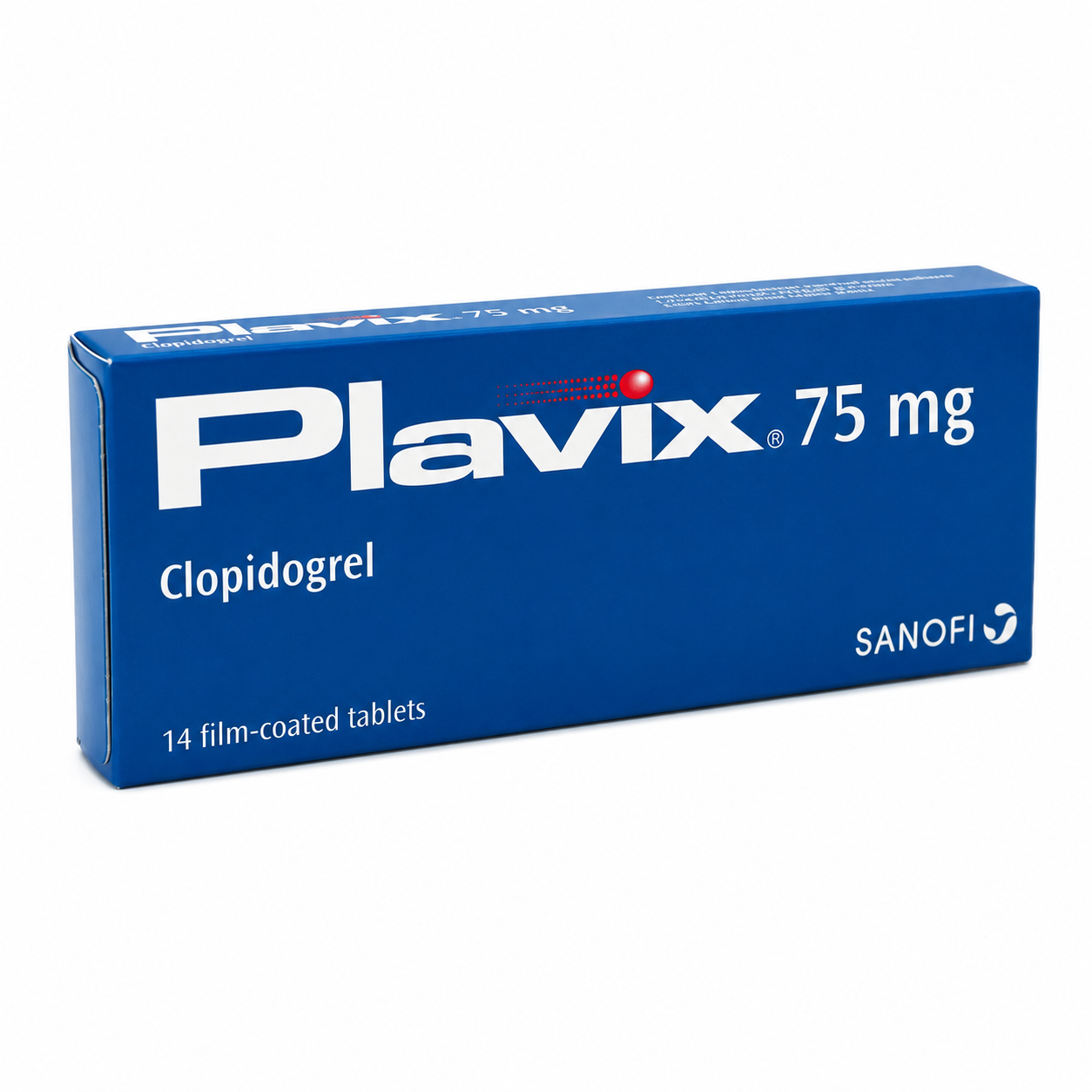

Plavix 75mg Clopidogrel Tablets 14s
Plavix 75mg Clopidogrel Tablets 14s is a prescription antiplatelet medicine used to reduce the formation of harmful arterial blood clots in selected adults at risk of heart attack, ischaemic stroke or other atherothrombotic events. Each film-coated tablet contains clopidogrel 75mg. Do not stop treatment without medical advice.
Description
Plavix 75mg Clopidogrel Tablets 14s is a prescription antiplatelet medicine containing clopidogrel hydrogen sulphate equivalent to clopidogrel 75mg in each film-coated tablet.
Clopidogrel reduces the ability of platelets to stick together and form harmful arterial blood clots. It is prescribed to reduce the risk of selected atherothrombotic events, including heart attack, ischaemic stroke and complications associated with peripheral arterial disease or acute coronary syndrome.
Plavix may be prescribed alone or together with acetylsalicylic acid, commonly known as aspirin, depending on the patient’s diagnosis, recent cardiovascular event, stent treatment, bleeding risk and overall clinical plan.
Do not stop taking Plavix without medical advice. Premature interruption may increase the risk of a serious blood clot, particularly after a heart attack, stroke, coronary angioplasty or stent placement.
Plavix 75mg Product Information
| Product Name | Plavix Tablet 75mg |
|---|---|
| Active Ingredient | Clopidogrel |
| Active-Salt Content | Clopidogrel hydrogen sulphate 97.875mg |
| Equivalent Clopidogrel Strength | 75mg per tablet |
| Dosage Form | Film-coated tablet |
| Tablet Appearance | Pink, round, biconvex tablet marked “75” on one side and “1171” on the other |
| Pack Size | 14 tablets |
| Pack Configuration | 1 blister pack of 14 tablets |
| Therapeutic Class | Platelet-aggregation inhibitor |
| Medicine Class | P2Y12 antiplatelet medicine |
| ATC Classification | B01AC04 |
| Medicine Classification | Prescription medicine |
| Malaysian Registration Number | MAL19992344AZ |
| Malaysian Registration Holder | Sanofi-Aventis (Malaysia) Sdn. Bhd. |
| Manufacturer | Sanofi Winthrop Industrie, France |
| Route of Administration | Oral |
What Is Plavix 75mg Used For?
Plavix is prescribed to prevent atherothrombotic events in selected adults. Atherothrombosis occurs when a blood clot forms in an artery that has been narrowed or damaged by atherosclerosis.
Depending on the approved indication and individual prescription, Plavix may be used in patients who have:
- Previously experienced a myocardial infarction or heart attack
- Previously experienced an ischaemic stroke
- Established peripheral arterial disease
- Unstable angina
- Non-ST-segment elevation myocardial infarction
- ST-segment elevation myocardial infarction
- Undergone percutaneous coronary intervention
- Received a coronary-artery stent
- Experienced a moderate-to-high-risk transient ischaemic attack
- Experienced a minor ischaemic stroke
- Atrial fibrillation and cannot take an appropriate vitamin K antagonist, when combined treatment with aspirin is considered suitable
The treatment duration and whether aspirin is also prescribed depend on the cardiovascular condition, procedure, bleeding risk and specialist treatment plan.
Prevention After Heart Attack, Stroke or Peripheral Arterial Disease
Plavix may be prescribed as long-term antiplatelet treatment in adults who have previously experienced a heart attack or ischaemic stroke or who have established peripheral arterial disease.
The purpose of treatment is to reduce the likelihood of platelets forming another arterial clot that could cause a further heart attack, stroke or another vascular complication.
Acute Coronary Syndrome and Coronary Stents
In acute coronary syndrome, Plavix is commonly used with low-dose aspirin. Acute coronary syndrome includes unstable angina and certain types of heart attack.
Patients who undergo coronary angioplasty or receive a stent may require dual antiplatelet therapy consisting of clopidogrel and aspirin. This helps reduce the risk of a clot forming inside the treated artery or stent.
Loading doses used during a heart attack, angioplasty or stent procedure must only be given according to an acute-care cardiology protocol. Patients must not take additional Plavix tablets to create a loading dose unless specifically instructed by the treating medical team.
Transient Ischaemic Attack and Minor Ischaemic Stroke
For selected adults with a moderate-to-high-risk transient ischaemic attack or a minor ischaemic stroke, clopidogrel may be started with aspirin within 24 hours of the event.
The approved reference regimen involves a medically supervised clopidogrel loading dose followed by 75mg once daily together with low-dose aspirin for 21 days, after which single antiplatelet treatment is continued.
This regimen is not suitable for every stroke or TIA patient. Brain imaging, stroke severity, bleeding risk and eligibility for other interventions must be assessed before treatment.
Atrial Fibrillation
In selected adults with atrial fibrillation who have at least one vascular risk factor, cannot take a vitamin K antagonist and have a low risk of major bleeding, Plavix may be prescribed together with aspirin.
Oral anticoagulants are generally more effective than clopidogrel and aspirin for preventing atrial-fibrillation-related stroke. Plavix and aspirin should therefore only be used for this indication when the treating doctor determines that anticoagulant treatment is unsuitable.
How Plavix Works
Platelets are small blood components that help form clots after an injury. They become activated when substances such as adenosine diphosphate, commonly abbreviated as ADP, bind to receptors on the platelet surface.
Clopidogrel is converted in the body into an active metabolite. This active metabolite irreversibly blocks the platelet P2Y12 ADP receptor.
Blocking this receptor:
- Reduces platelet activation
- Reduces platelet aggregation
- Makes platelets less likely to form an arterial clot
- Helps reduce the risk of selected heart attack and stroke events
The antiplatelet effect lasts for the remaining lifespan of the affected platelet. Normal clotting ability returns gradually as the body produces new platelets.
Is Plavix a Blood Thinner?
Plavix is often described informally as a blood thinner, but it does not physically dilute the blood.
It is an antiplatelet medicine. It reduces the ability of platelets to stick together. This is different from anticoagulants such as warfarin, apixaban, rivaroxaban or dabigatran, which act on blood-clotting proteins.
How to Take Plavix 75mg
- Take Plavix exactly as prescribed by the treating doctor.
- The usual maintenance dose is one 75mg tablet once daily.
- Swallow the tablet with water.
- Plavix may be taken with or without food.
- Take it at approximately the same time each day.
- Do not take additional tablets unless specifically instructed.
- Do not change the dosage or treatment duration independently.
- Do not stop treatment without consulting the prescribing doctor.
Specialist loading-dose regimens may be used during an acute coronary event, angioplasty, stent procedure, TIA or minor stroke. Loading doses are not routine maintenance doses and should only be administered under medical direction.
What to Do If a Dose Is Missed
Less Than 12 Hours Late
Take the missed tablet as soon as it is remembered. Take the next tablet at the usual scheduled time.
More Than 12 Hours Late
Skip the forgotten tablet and take the next dose at the normal time.
Do not take two tablets together to replace a missed dose.
Contact the treating doctor or pharmacist if several doses have been missed, particularly when Plavix was prescribed after a recent heart attack, stroke, angioplasty or coronary-stent procedure.
Do Not Stop Plavix Without Medical Advice
Stopping clopidogrel allows platelet function to recover and may increase the risk of arterial clot formation.
This is particularly important for patients who:
- Recently received a coronary stent
- Recently experienced a heart attack
- Recently experienced a TIA or ischaemic stroke
- Are taking clopidogrel together with aspirin
- Have been given a specific minimum duration of antiplatelet treatment
Contact the prescribing doctor before stopping the medicine for dental treatment, surgery, bruising, nosebleeds or another concern.
Bleeding Risk
Bleeding is the most important and most commonly reported risk associated with clopidogrel.
Because Plavix reduces platelet aggregation, it may take longer than usual for bleeding to stop after an injury, dental procedure or surgery.
Possible signs of increased bleeding include:
- Bruising more easily than usual
- Longer bleeding after a cut
- Nosebleeds
- Bleeding gums
- Blood in the urine
- Red or black stools
- Vomiting blood or material resembling coffee grounds
- Coughing up blood
- Unusually heavy or prolonged menstrual bleeding
- Unexpected bleeding from another site
Minor bruising may occur during treatment. Persistent, severe, spontaneous or unexplained bleeding requires medical assessment.
When Bleeding Requires Urgent Attention
Seek urgent medical attention for:
- Bleeding that does not stop with firm pressure
- Vomiting blood
- Black or tar-like stools
- A large amount of blood in the urine or stool
- A sudden severe headache
- Sudden weakness, numbness, confusion or speech difficulty
- Collapse, fainting or severe dizziness
- Bleeding after a significant head injury
- Severe abdominal pain with signs of bleeding
Surgery and Dental Procedures
Tell every doctor, dentist, surgeon and pharmacist that Plavix is being taken.
If an elective procedure is planned and the antiplatelet effect is temporarily not desired, professional product information states that clopidogrel may need to be discontinued seven days before surgery.
Patients must not stop Plavix themselves. The risk of surgical bleeding must be balanced against the risk of heart attack, stroke or stent thrombosis. The final decision and timing must be determined by the prescribing doctor and procedural team.
Who Should Not Take Plavix?
Plavix should not be used by patients with:
- An allergy to clopidogrel
- An allergy to another ingredient in the tablet
- Active pathological bleeding
- An actively bleeding stomach or intestinal ulcer
- Current bleeding within the brain
- Severe liver impairment
Patients should disclose any previous allergic or blood-cell reaction to clopidogrel, ticlopidine, prasugrel or another thienopyridine antiplatelet medicine.
Consult a Doctor Before Taking Plavix
Additional assessment is required if the patient has:
- A recent serious injury
- A recent operation or dental procedure
- A planned operation or dental procedure
- A current or previous stomach ulcer
- A blood disorder that increases bleeding risk
- Kidney impairment
- Liver disease
- A previous non-traumatic brain haemorrhage
- A recent ischaemic stroke
- A history of allergy to another antiplatelet medicine
- Concurrent anticoagulant, antiplatelet, anti-inflammatory or antidepressant treatment
Thrombotic Thrombocytopenic Purpura Warning
Thrombotic thrombocytopenic purpura, commonly abbreviated as TTP, is a very rare but potentially fatal reaction reported with clopidogrel, sometimes after only a short period of treatment.
Seek urgent medical attention if symptoms occur such as:
- Fever
- Unexplained extreme tiredness
- Confusion or another neurological change
- Yellowing of the skin or eyes
- Unexplained bruising
- Small red or purple pinpoint spots beneath the skin
- Reduced kidney function or reduced urine output
TTP requires immediate hospital assessment and specialist treatment.
Acquired Haemophilia
Acquired haemophilia has been reported rarely during clopidogrel treatment.
Seek medical assessment for unexpected, spontaneous or prolonged bleeding, especially when blood testing shows an unexplained prolonged activated partial thromboplastin time.
CYP2C19 and Response to Clopidogrel
Clopidogrel must be converted into its active form by liver enzymes, including CYP2C19.
Some patients have genetic variants that make them poor CYP2C19 metabolisers. These patients may form less active clopidogrel metabolite and may have a reduced antiplatelet response.
Genetic or platelet-function testing may be considered in selected clinical situations. Treatment decisions must be made by the treating specialist.
Possible Side Effects
Not everyone experiences side effects. Possible effects include:
- Bruising
- Nosebleeds
- Bleeding at injection or puncture sites
- Gastrointestinal bleeding
- Diarrhoea
- Abdominal pain
- Indigestion or heartburn
- Nausea
- Headache
- Dizziness
- Skin rash or itching
Persistent, troublesome or unexpected effects should be discussed with a doctor or pharmacist.
Serious Reactions Requiring Medical Attention
Seek prompt or urgent medical attention for:
- Severe, spontaneous or prolonged bleeding
- Symptoms of bleeding within the brain
- Symptoms of TTP
- Yellowing of the skin or eyes
- Severe abdominal pain
- Swelling of the face, lips, tongue or throat
- Difficulty breathing or swallowing
- A widespread blistering or peeling skin reaction
- Fever with rash or blood-cell abnormalities
- A severe or unexpected allergic reaction
Medicine Interactions
Tell the doctor and pharmacist about all prescription medicines, non-prescription products, traditional medicines and supplements being used.
Medicines That May Increase Bleeding
- Warfarin and other oral anticoagulants
- Apixaban, rivaroxaban, dabigatran and similar anticoagulants
- Heparin and other injectable anticoagulants
- Aspirin and other antiplatelet medicines
- Ticlopidine, prasugrel or ticagrelor
- Non-steroidal anti-inflammatory medicines such as ibuprofen, diclofenac and naproxen
- COX-2 inhibitors
- Thrombolytic medicines
- Selective serotonin reuptake inhibitors used for depression
Aspirin is intentionally combined with Plavix for certain conditions, but it should only be used in the dose and duration prescribed by the treating doctor.
Omeprazole and Esomeprazole
Omeprazole and esomeprazole inhibit CYP2C19 and may reduce conversion of clopidogrel into its active metabolite.
Concurrent use is generally discouraged as a precaution. Patients requiring gastric protection should not independently stop either medicine; the treating doctor or pharmacist should select an appropriate regimen.
Other Medicines Requiring Review
- Fluconazole or voriconazole
- Efavirenz and selected antiretroviral medicines
- Carbamazepine
- Moclobemide
- Rifampicin
- Repaglinide
- Paclitaxel
- Rosuvastatin
- Morphine and other opioid medicines
Do not start, stop or substitute a medicine without consulting the treating healthcare professional.
Can Painkillers Be Taken With Plavix?
Non-steroidal anti-inflammatory medicines such as ibuprofen, diclofenac and naproxen may increase gastrointestinal and other bleeding risks when combined with clopidogrel.
Paracetamol may be suitable for some patients, but the correct product, dose and medical history should still be considered. Ask a doctor or pharmacist before selecting a pain medicine.
Pregnancy and Breastfeeding
Clopidogrel is preferably avoided during pregnancy as a precaution because adequate human pregnancy information is limited.
Patients who are pregnant, planning pregnancy or think they may be pregnant should inform the prescribing doctor.
Breastfeeding should not normally continue during Plavix treatment because it is unknown whether clopidogrel passes into human breast milk.
Use in Children and Adolescents
Plavix should not be used in children or adolescents because its efficacy has not been established for the approved adult indications.
Kidney and Liver Considerations
Clinical experience is limited in patients with kidney impairment, and treatment should be used cautiously.
Plavix is contraindicated in severe liver impairment. Patients with moderate liver disease may also have an increased bleeding tendency and require careful assessment.
Lactose and Other Ingredients
Plavix contains lactose. Patients with rare hereditary galactose intolerance, total lactase deficiency or glucose-galactose malabsorption should not take the product without appropriate professional assessment.
The tablet also contains hydrogenated castor oil, which may cause stomach discomfort or diarrhoea in some patients.
Storage Instructions
- Follow the storage instructions printed on the Malaysian carton.
- Keep the tablets in their original blister packaging until required.
- PVC/PVDC/aluminium blister presentations should generally be stored below 30°C.
- Protect the tablets from excessive heat and moisture.
- Keep out of sight and reach of children.
- Do not use tablets that appear damaged or deteriorated.
- Do not use after the expiry date printed on the carton or blister.
- Expiry varies by supplied batch.
Frequently Asked Questions
What is the active ingredient in Plavix 75mg?
Each tablet contains clopidogrel hydrogen sulphate 97.875mg, equivalent to clopidogrel 75mg.
What type of medicine is Plavix?
Plavix is a P2Y12 antiplatelet medicine that reduces platelet aggregation and arterial blood-clot formation.
What is Plavix 75mg used for?
It is used to reduce the risk of selected atherothrombotic events in adults with previous heart attack, ischaemic stroke, peripheral arterial disease, acute coronary syndrome, coronary-stent treatment or other approved cardiovascular or cerebrovascular indications.
Is Plavix a blood thinner?
It is commonly described as a blood thinner, but technically it is an antiplatelet medicine rather than an anticoagulant.
How often is Plavix 75mg taken?
The usual maintenance dosage is one 75mg tablet once daily. Loading doses used during acute treatment must only be administered under medical direction.
Can Plavix be taken with food?
Yes. Plavix may be taken with or without food.
What should be done if a dose is missed?
If less than 12 hours have passed, take the tablet when remembered. If more than 12 hours have passed, skip it and take the next scheduled dose. Do not take a double dose.
Can Plavix be stopped suddenly?
Do not stop Plavix without medical advice. Sudden interruption may increase the risk of heart attack, stroke or stent thrombosis.
Can Plavix be taken with aspirin?
Yes, when both medicines are specifically prescribed for conditions such as acute coronary syndrome, coronary-stent treatment, selected TIA or minor stroke, or atrial fibrillation when anticoagulation is unsuitable.
Can Plavix be taken with omeprazole or esomeprazole?
Concurrent use is generally discouraged because these medicines may reduce the activation of clopidogrel. The treating healthcare professional should select an appropriate gastric-protection strategy.
Can ibuprofen be taken with Plavix?
Ibuprofen and other NSAIDs may increase bleeding risk. Obtain professional advice before combining them with clopidogrel.
Does Plavix cause bruising?
Yes. Bruising and prolonged bleeding from small cuts may occur because clopidogrel reduces platelet aggregation.
What bleeding symptoms require urgent treatment?
Urgent assessment is required for uncontrolled bleeding, vomiting blood, black stools, a severe sudden headache, neurological symptoms, collapse or bleeding after significant head trauma.
Should Plavix be stopped before surgery?
When an elective procedure requires temporary removal of the antiplatelet effect, clopidogrel may need to be stopped seven days beforehand. Only the treating doctor and procedural team should make this decision.
Can Plavix be used during pregnancy?
Clopidogrel is preferably avoided during pregnancy unless the treating specialist determines that treatment is necessary.
Can Plavix be used while breastfeeding?
Breastfeeding should not normally continue during Plavix treatment.
Is Plavix a prescription medicine in Malaysia?
Yes. Plavix is a prescription medicine and should only be supplied and used according to a valid prescription and professional instructions.
What is the Malaysian registration number?
The Malaysian registration number is MAL19992344AZ.
Who holds the Malaysian registration?
The Malaysian product registration holder is Sanofi-Aventis (Malaysia) Sdn. Bhd.
Who manufactures Plavix 75mg?
The registered Malaysian product is manufactured by Sanofi Winthrop Industrie in France.
How many tablets are supplied?
The P-Hub presentation contains 14 Plavix 75mg film-coated tablets.
Can pharmacies request Plavix through P-Hub?
Plavix 75mg Clopidogrel Tablets 14s is listed in the P-Hub B2B catalogue for approved pharmacy members. Quotation, ordering eligibility and supply are subject to P-Hub membership requirements, prescription medicine controls and current stock availability.
Prescription Medicine Notice
Plavix 75mg is a prescription antiplatelet medicine. It should only be supplied, dispensed and used according to applicable Malaysian requirements and the directions of a registered doctor or pharmacist.
Do not independently start aspirin, stop Plavix, alter the dosage or interrupt treatment before surgery or dental treatment. Treatment changes may increase either bleeding risk or the risk of a serious arterial blood clot.
The information on this page is provided for pharmacy catalogue and professional product-reference purposes. It does not replace an individual cardiovascular assessment, specialist treatment plan, valid prescription, approved Malaysian package insert or advice from a qualified healthcare professional.
Product appearance, packaging, batch number, availability and expiry date may vary. Verify all information on the physical Malaysian carton, blister and approved insert before dispensing or use.
Product Information Sources
- NPRA Malaysia – Plavix 75mg Registration Renewal
- NPRA Malaysia – Immediate-Release Comparator Product Register
- NPRA Malaysia – Plavix Acute Coronary Syndrome Additional Indication
- NPRA Malaysia – Plavix TIA and Minor Ischaemic Stroke Indication
- European Medicines Agency – Plavix Professional and Patient Product Information
Product information last reviewed: 12 July 2026.
Reviews (0)
Only logged in customers who have purchased this product may leave a review.
Shipping and Delivery




























Reviews
There are no reviews yet.