P-Hub B2B access is available for approved pharmacy members only.


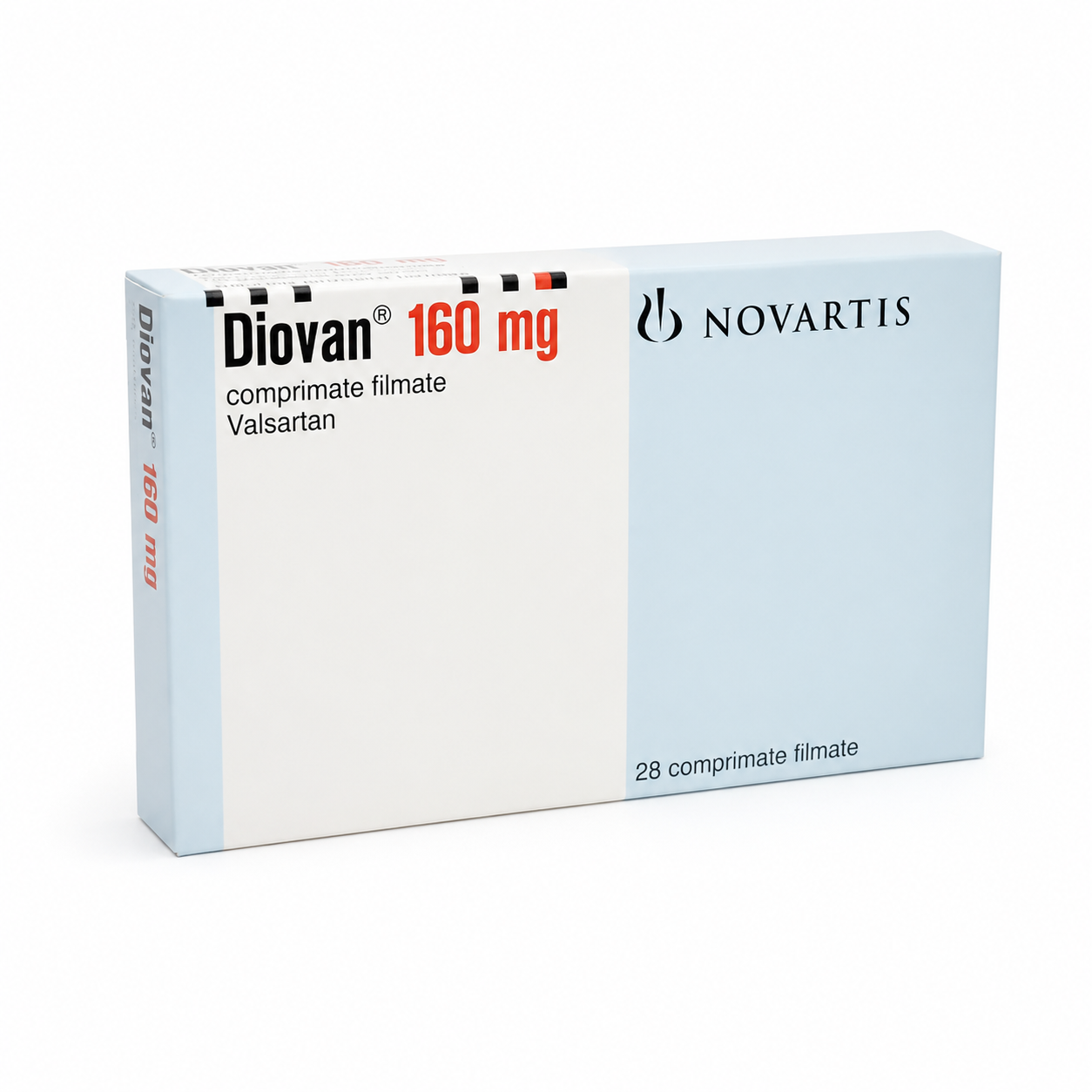

Diovan 160mg Valsartan Tablets 28s
“`html
Diovan 160mg Valsartan Tablets 28s is a prescription cardiovascular medicine containing valsartan 160mg, an angiotensin II receptor blocker. It is used for hypertension and may also be prescribed for selected adults with heart failure or following a recent myocardial infarction.
“`
Description
Diovan 160mg Valsartan Tablets 28s is a prescription cardiovascular medicine containing valsartan 160mg in each film-coated tablet. Valsartan belongs to a class of medicines called angiotensin II receptor blockers, commonly abbreviated as ARBs.
Diovan is used to treat hypertension, commonly known as high blood pressure. It may also be prescribed for selected adults with heart failure or following a recent myocardial infarction when clinically appropriate.
The 160mg strength may be selected when a doctor determines that this dose is appropriate based on the patient’s diagnosis, blood-pressure response, kidney function, liver function, concurrent medicines and overall treatment plan.
Diovan 160mg Valsartan Product Information
| Product Name | Diovan 160mg Film-Coated Tablet |
|---|---|
| Active Ingredient | Valsartan |
| Strength | 160mg per tablet |
| Dosage Form | Film-coated tablet |
| Pack Size | 28 tablets |
| Pack Configuration | 2 blister strips of 14 tablets |
| Therapeutic Class | Angiotensin II receptor blocker |
| Medicine Class Abbreviation | ARB |
| Medicine Classification | Prescription medicine |
| Brand | Novartis |
| Product Registration Holder | Novartis Corporation (Malaysia) Sdn. Bhd. |
| Manufacturer | Novartis Farma S.P.A., Italy |
| Malaysian Registration Number | MAL09042431ARZ |
| Route of Administration | Oral |
What Is Diovan 160mg Used For?
Diovan 160mg may be prescribed for selected adult patients with hypertension and certain cardiovascular conditions. The approved indication and dosage depend on the individual patient’s diagnosis and treatment plan.
Hypertension
Diovan is used to treat hypertension, commonly known as high blood pressure. The 160mg strength may be prescribed when the doctor determines that this dose is required to achieve appropriate blood-pressure control.
High blood pressure often causes no noticeable symptoms. However, persistent uncontrolled hypertension can place additional strain on the heart, kidneys, brain and blood vessels. Patients should continue treatment and attend scheduled reviews even when they feel well.
Heart Failure
Valsartan may be prescribed for selected adults with heart failure as part of a broader treatment plan. The doctor will consider the patient’s symptoms, heart function, blood pressure, kidney function and other cardiovascular medicines before selecting the dose.
Heart-failure treatment usually requires careful dose titration and ongoing clinical monitoring. Patients should not independently change between Diovan strengths.
Following a Recent Myocardial Infarction
Diovan may be prescribed following a recent myocardial infarction, commonly known as a heart attack, in clinically stable patients with evidence of left ventricular failure or left ventricular systolic dysfunction.
Treatment following a myocardial infarction requires specialist assessment, gradual dose titration and monitoring of blood pressure and kidney function.
How Diovan Works
Angiotensin II is a naturally occurring substance that can cause blood vessels to tighten and promote sodium retention.
Valsartan selectively blocks the action of angiotensin II at the AT1 receptor. This helps blood vessels relax, reduces vascular resistance and supports a reduction in blood pressure.
In selected patients with heart failure or following a myocardial infarction, blocking excessive angiotensin II activity may also reduce strain on the cardiovascular system.
Diovan 160mg contains valsartan as its only active ingredient. It does not contain a diuretic or water tablet.
How to Take Diovan 160mg
- Take Diovan exactly as prescribed by the treating doctor.
- Swallow the tablet with water.
- Diovan may generally be taken with or without food.
- Take each prescribed dose at approximately the same time each day.
- Do not increase, reduce or stop the medicine without medical advice.
- Do not change between the 80mg and 160mg strengths without a new professional instruction.
- Do not take a double dose to compensate for a missed dose.
- Continue any diet, physical-activity and blood-pressure monitoring plan recommended by the healthcare professional.
The appropriate frequency and total daily dose differ according to the indication. Treatment for hypertension may use a different dosing schedule from treatment for heart failure or following a myocardial infarction.
The score line on the Diovan 160mg tablet is intended to make the tablet easier to break for swallowing. It is not intended to divide the tablet into two equal 80mg doses.
Monitoring During Treatment
A doctor may monitor the following before and during treatment:
- Blood pressure
- Kidney function
- Blood potassium levels
- Other electrolyte levels when clinically appropriate
- Signs of dehydration or excessive blood-pressure reduction
- Heart-failure symptoms where applicable
- Response following myocardial infarction where applicable
Closer monitoring may be needed in older adults, patients with kidney impairment, patients taking diuretics and those using other medicines that affect the renin-angiotensin system.
Important Safety Information
- Diovan is a prescription medicine and should not be shared with another person.
- Diovan must not be used during pregnancy.
- Inform the doctor immediately if pregnancy occurs or is suspected during treatment.
- Tell the prescriber about kidney disease, liver disease, biliary obstruction or previous angioedema.
- Tell the doctor about significant vomiting, diarrhoea, heavy sweating or reduced fluid intake.
- Rise slowly from sitting or lying positions if dizziness occurs.
- Do not drive or operate machinery when dizziness, weakness or reduced alertness is present.
- Do not take potassium supplements or potassium-containing salt substitutes unless advised by a healthcare professional.
- Attend all scheduled medical reviews and laboratory tests.
Who Should Not Take Diovan?
Diovan may be contraindicated or unsuitable for patients with certain conditions, including:
- Known allergy to valsartan or another ingredient in the tablet
- Pregnancy
- Severe liver impairment
- Biliary cirrhosis or cholestasis
- Certain combinations involving aliskiren in patients with diabetes or impaired kidney function
Additional caution may be required in patients with kidney impairment, heart failure, narrowing of the kidney arteries, dehydration, low blood pressure or a history of angioedema.
The treating doctor and pharmacist should review the patient’s complete medical history and medication list before Diovan is started or its dose is changed.
Low Blood Pressure and Dehydration
Valsartan may cause symptomatic low blood pressure, particularly in patients who are significantly dehydrated or depleted of sodium.
The risk may increase in patients using high-dose diuretics or experiencing:
- Severe vomiting or diarrhoea
- Heavy sweating
- Reduced fluid intake
- Prolonged illness or fever
- Excessive fluid loss
Symptoms may include dizziness, weakness, blurred vision, light-headedness or fainting. Contact a healthcare professional if these symptoms are persistent or severe.
Kidney Function and Potassium Levels
Medicines that affect the renin-angiotensin system can alter kidney function and blood potassium levels in susceptible patients.
Additional monitoring may be required for patients who:
- Have kidney impairment
- Have heart failure
- Have narrowing of one or both kidney arteries
- Are significantly dehydrated
- Take potassium supplements
- Use potassium-sparing diuretics
- Regularly use non-steroidal anti-inflammatory medicines
- Use another medicine that acts on the renin-angiotensin system
Possible symptoms of high potassium may include muscle weakness, unusual tiredness, tingling sensations or an irregular heartbeat. High potassium may also occur without noticeable symptoms and may only be identified through a blood test.
Angioedema Warning
Angioedema has been reported in patients treated with valsartan. It may involve swelling of the face, lips, tongue, throat or airway.
Stop taking the medicine and seek urgent medical attention if swelling, difficulty breathing or difficulty swallowing occurs.
Valsartan should not normally be restarted after valsartan-associated angioedema unless an appropriate medical specialist determines otherwise.
Possible Side Effects
Not everyone experiences side effects. Possible effects associated with valsartan include:
- Dizziness or light-headedness
- Low blood pressure
- Postural dizziness when standing
- Tiredness or weakness
- Headache
- Cough
- Nausea or abdominal discomfort
- Diarrhoea
- Increased blood potassium
- Changes in kidney-function test results
The likelihood and severity of side effects may differ according to the indication, total daily dose, concurrent medicines and the patient’s underlying medical condition.
Serious Symptoms Requiring Medical Attention
Seek prompt or urgent medical attention if any of the following occurs:
- Swelling of the face, lips, tongue or throat
- Difficulty breathing or swallowing
- Fainting or severe dizziness
- Very low urine output
- Severe weakness or an irregular heartbeat
- A severe, blistering or widespread skin reaction
- Rapid worsening of heart-failure symptoms
- Another severe or unexpected reaction
Medicine Interactions
Tell the doctor and pharmacist about all prescription medicines, non-prescription products, traditional medicines and supplements being used.
Products requiring particular consideration include:
- ACE inhibitors, other ARBs or aliskiren: combined renin-angiotensin system blockade may increase the risk of low blood pressure, high potassium and impaired kidney function.
- Potassium supplements: blood potassium levels may increase.
- Potassium-containing salt substitutes: these may contribute to elevated potassium.
- Potassium-sparing diuretics: closer potassium and kidney-function monitoring may be required.
- Non-steroidal anti-inflammatory medicines: medicines such as ibuprofen or diclofenac may reduce the blood-pressure-lowering effect and increase kidney risk in susceptible patients.
- Lithium: valsartan may increase lithium concentrations and the risk of lithium toxicity.
- Diuretics and other blood-pressure medicines: combined use may increase the likelihood of low blood pressure.
- Other medicines affecting kidney function: additional monitoring may be necessary.
Do not start, stop or change another medicine without consulting the treating doctor or pharmacist.
Pregnancy and Breastfeeding
Diovan must not be used during pregnancy. Medicines that act directly on the renin-angiotensin system may cause serious injury or death to a developing baby.
Patients who are pregnant, planning a pregnancy or think they may be pregnant should contact their doctor immediately. If pregnancy is detected during treatment, Diovan should be discontinued under medical direction and replaced with an appropriate alternative.
Patients who are breastfeeding or planning to breastfeed should consult their doctor before taking Diovan. The doctor should determine whether an alternative treatment is more appropriate.
Use in Children and Adolescents
Use of Diovan in children and adolescents should follow the current approved Malaysian product information and a specialist prescription. Adult Diovan 160mg dosing should not be applied to a child without individual medical assessment.
Storage Instructions
- Store according to the conditions printed on the carton and approved package insert.
- Keep the tablets in their original blister packaging until required.
- Protect from excessive heat and moisture.
- Keep out of reach of children.
- Do not use tablets that appear damaged or deteriorated.
- Do not use after the expiry date printed on the supplied packaging.
- Product packaging, batch number and expiry date may vary between supplied batches.
Frequently Asked Questions
What is the active ingredient in Diovan 160mg?
Each Diovan 160mg film-coated tablet contains valsartan 160mg.
What type of medicine is Diovan?
Diovan is an angiotensin II receptor blocker, commonly abbreviated as an ARB.
What is Diovan 160mg used for?
Diovan is used to treat hypertension. It may also be prescribed for selected adults with heart failure or following a recent myocardial infarction.
Is Diovan a blood-pressure medicine?
Yes. Valsartan helps lower blood pressure by blocking the effects of angiotensin II and allowing blood vessels to relax.
Is Diovan a diuretic or water tablet?
No. Diovan 160mg contains valsartan as a single active ingredient and does not contain a diuretic.
Is Diovan the same as Co-Diovan?
No. Diovan contains valsartan only. Co-Diovan contains valsartan combined with hydrochlorothiazide, a thiazide diuretic.
What is the difference between Diovan 80mg and Diovan 160mg?
Both products contain valsartan. Diovan 80mg contains 80mg per tablet, while Diovan 160mg contains 160mg per tablet. Patients should not change between the strengths unless instructed by the treating doctor.
Is Diovan 160mg a prescription medicine in Malaysia?
Yes. Diovan is a prescription medicine and should only be supplied and used according to a valid prescription and professional instructions.
What is the Malaysian registration number for Diovan 160mg?
The Malaysian product registration number is MAL09042431ARZ.
Who manufactures Diovan 160mg?
Diovan 160mg is manufactured by Novartis Farma S.P.A., Italy. The Malaysian product registration holder is Novartis Corporation (Malaysia) Sdn. Bhd.
How many tablets are supplied in one pack?
The P-Hub listing contains 28 tablets, supplied as two blister strips of 14 tablets.
Can Diovan be taken with food?
Diovan may generally be taken with or without food and should be swallowed with water. Follow the instructions provided by the treating doctor.
Can a Diovan 160mg tablet be divided into two equal 80mg doses?
No. The score line is intended to make the tablet easier to break for swallowing and is not intended to provide two equal 80mg doses.
Can Diovan increase potassium levels?
Yes. Valsartan may increase blood potassium levels in some patients, particularly when combined with potassium supplements, potassium-sparing diuretics or other medicines that affect potassium.
Can Diovan be used during pregnancy?
No. Diovan must not be used during pregnancy because medicines acting on the renin-angiotensin system may cause serious harm to a developing baby.
Can a patient stop Diovan when blood pressure improves?
No. High blood pressure often causes no noticeable symptoms. Do not stop Diovan unless instructed by the treating doctor, as blood pressure may rise again.
Can pharmacies request Diovan 160mg through P-Hub?
Diovan 160mg Valsartan Tablets 28s is listed in the P-Hub B2B catalogue for approved pharmacy members. Quotation, ordering eligibility and supply are subject to P-Hub membership requirements, prescription medicine controls and current stock availability.
Prescription Medicine Notice
Diovan 160mg is a prescription medicine. It should only be supplied, dispensed and used according to applicable Malaysian requirements and the directions of a registered doctor or pharmacist.
The information on this page is provided for pharmacy catalogue and professional product-reference purposes. It does not replace an individual medical assessment, prescription, approved Malaysian package insert or advice from a qualified healthcare professional.
Product appearance, packaging, batch number, availability and expiry date may vary. Verify all information on the physical product packaging and approved insert before dispensing or use.
Product Information Sources
- Novartis – Diovan Professional Product Information
- National Pharmaceutical Regulatory Agency Malaysia – Diovan Registration Renewal Record
- P-Hub – Diovan 160mg Valsartan Tablets 28s Catalogue Listing
Product information last reviewed: 11 July 2026.
Reviews (0)
Only logged in customers who have purchased this product may leave a review.
Shipping and Delivery























Reviews
There are no reviews yet.